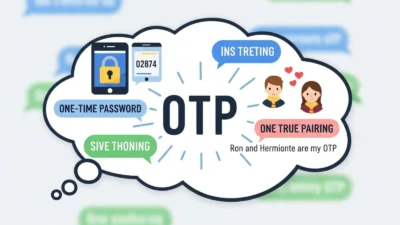
The term “OTP” is a popular abbreviation used in digital communication, but its meaning can change completely depending on the context. In text slang, OTP mainly has two widely recognized meanings:
One Time Password and One True Pairing. Understanding both is important because they are used in very different situations.
The first meaning, One Time Password, is related to security and verification. It is a temporary code sent to your phone or email when you try to log in to an account, make an online payment, or verify your identity.
This OTP is usually valid for a short time and helps protect your personal data from unauthorized access.
For example,
When you log in to a banking app, you may receive a message like “Your OTP is 672914.”
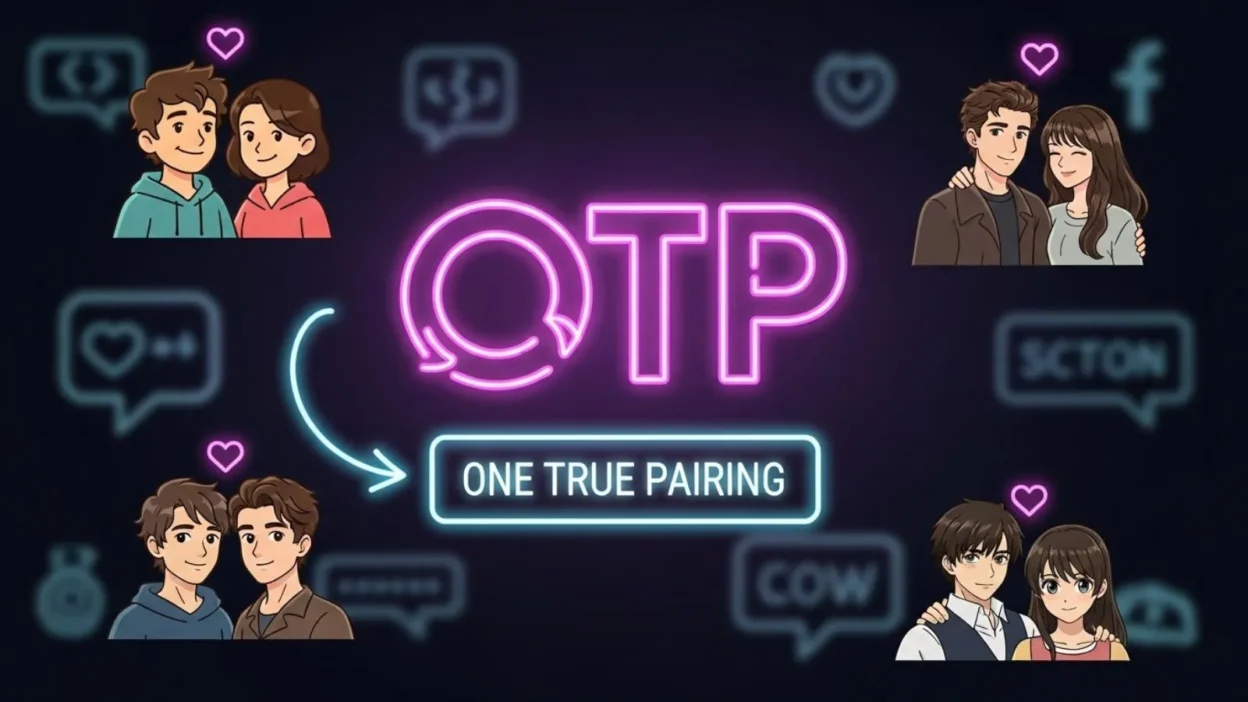
The second meaning, One True Pairing, comes from internet fandom culture. It is used when fans strongly believe that two characters, celebrities, or even fictional personalities are perfect for each other. People often use it in social media comments, fan pages, and discussions.
For example,
Someone might say, “Harry and Hermione are my OTP,” meaning they believe the two are a perfect couple.
Because OTP has these two completely different meanings, confusion is very common.
That’s why understanding the context of the conversation is important. Whether it appears in a security message or a social media post, the meaning of OTP depends entirely on how and where it is used.
OTP Meaning as “One Time Password”
One of the most important and widely used meanings of OTP is “One Time Password.” This refers to a temporary security code that is automatically generated and sent to a user during login, transaction, or account verification. Its main purpose is to add an extra layer of protection to online accounts and sensitive information.
Whenever you try to access services like online banking, email accounts, social media platforms, or e-commerce websites, the system may ask for OTP verification. After entering your username and password, you receive a unique numeric or alphanumeric code on your registered mobile number or email. You must enter this code within a short time frame to complete the process. For example, a message might say: “Your OTP is 493820. Do not share this code with anyone.”
The key feature of a One Time Password is that it can only be used once and expires quickly, usually within a few minutes. This makes it extremely useful in preventing unauthorized access, even if someone knows your main password. Hackers cannot reuse an old OTP, which strengthens account security.
OTP is also widely used in two-factor authentication (2FA), where users must confirm their identity through both a password and a verification code. This system has become a standard safety measure across digital platforms in 2026.
However, users must be careful not to share OTPs with anyone, even if they claim to be from a company or bank. Scammers often try to trick people into revealing their OTP, which can lead to account theft or financial loss.
H2: OTP Meaning as “One True Pairing”
In internet slang and fandom culture, OTP also stands for “One True Pairing.” This meaning is completely different from the security-based OTP and is mainly used in entertainment and fan communities online. It describes a person’s favorite romantic couple—usually characters from movies, TV shows, anime, books, or even real-life celebrities—that they strongly believe are perfect for each other.
Fans use OTP to express emotional attachment to a specific pairing. It does not necessarily mean the couple is officially together in the story; instead, it reflects a personal opinion or “ideal relationship” imagined by fans. For example, someone might say, “Elena and Damon are my OTP,” meaning they believe this pair has the best chemistry and emotional connection.
This usage of OTP became popular in online fandom spaces like Tumblr, Twitter (X), Instagram fan pages, and TikTok edits. Fans often create videos, artwork, memes, and discussions centered around their OTPs. Hashtags like #OTP or #MyOTP are commonly used to share favorite pairings and engage with other fans who have similar opinions.
OTP in this context is not limited to romance alone. Sometimes fans even use it jokingly for friendships or iconic duos they love watching together. The emotional intensity behind OTP culture is what makes it so popular in social media communities.
Unlike the technical meaning of OTP (One Time Password), this version is all about creativity, imagination, and emotional connection. Understanding this meaning helps you better navigate online fandom conversations and social media trends without confusion.
Where Do You See OTP Most in Daily Digital Life?
The abbreviation OTP appears across many digital platforms, but its meaning depends heavily on where you see it. In everyday online life, OTP is most commonly encountered in messaging apps, social media platforms, and secure login systems, making it one of the most versatile slang terms on the internet.
In WhatsApp, OTP is usually associated with verification messages when you register or log in to a new device. Users often receive automated texts containing a one-time code for account security. Similarly, in Instagram and Facebook, OTP is used during login attempts, password resets, or when enabling two-factor authentication.
On TikTok, Twitter (X), and Instagram posts, OTP is more likely to appear in its fandom meaning—One True Pairing. Here, users discuss favorite fictional couples, celebrities, or characters they believe are perfect matches. You’ll often see comments like “This couple is my OTP ❤️” under romantic edits or fan videos.
In gaming platforms, OTP is also commonly used for security verification when logging into accounts or confirming transactions. Meanwhile, in online banking and shopping apps, OTP is strictly used as a security code to verify user identity before completing payments or sensitive actions.
Because OTP is used in both technical and emotional contexts, confusion is very common, especially for beginners in internet slang. A banking OTP message and a fandom OTP comment can look similar at first glance, but their purposes are completely different.
Understanding the platform helps you quickly identify the meaning of OTP and avoid misinterpretation in digital communication.
Real-Life Examples of OTP in Conversations
Understanding OTP becomes much easier when you see how it is used in real conversations. Since OTP has two different meanings, the way it appears in chats can vary a lot depending on whether it is used for security or fandom discussions.
In a security context, OTP usually appears as an automated message from banks, apps, or websites. For example:
- “Your OTP is 582931. This code is valid for 2 minutes.”
- “Enter the OTP sent to your registered mobile number to proceed.”
In these cases, OTP is strictly a verification code, and users must enter it to complete login, payment, or account access.
In a fandom or social media context, OTP is used in a completely different way. It often appears in casual chats, comments, or posts.
For example:
- “They are my OTP 😍”
- “This couple is literally OTP goals!”
- “No one else compares, they are my OTP forever.”
Sometimes, confusion happens when both meanings overlap in fast conversations. For instance, someone unfamiliar with slang might think OTP in a comment refers to a password instead of a favorite couple. This is why context is very important in understanding its meaning.
In group chats, you might even see mixed usage, especially when friends talk about both social media trends and app notifications in the same conversation. One message might mention receiving an OTP code, while another might refer to a favorite celebrity couple as OTP.
Difference Between the Two OTP Meanings
Although both uses share the same abbreviation, the two meanings of OTP are completely different in purpose, tone, and context. Understanding this difference is important to avoid confusion in daily digital communication.
On one side, OTP as “One Time Password” is a technical and security-related term. It is used in serious situations such as logging into accounts, verifying identity, or completing online transactions. This OTP is automatically generated by systems and is time-sensitive, meaning it expires after a short period. Its main goal is to protect users from unauthorized access and cyber threats. It is never meant for entertainment or casual conversation.
On the other side, OTP as “One True Pairing” belongs to internet culture and fandom communities. It is emotional, creative, and opinion-based. People use it to describe their favorite fictional or celebrity couples they believe are perfect together. Unlike the security OTP, this version has no technical function and is used purely for expressing personal preference and enthusiasm in social media discussions.
The biggest difference lies in purpose and usage. Security OTP is functional and mandatory, while fandom OTP is expressive and optional. One is used in apps and banking systems, while the other appears in memes, comments, and fan pages.
Another key difference is tone. Security OTP is formal and serious, while fandom OTP is casual and emotional. One protects accounts, while the other builds online communities and discussions.
Because both share the same abbreviation, context is the only way to identify the correct meaning. Recognizing this difference helps users communicate clearly and avoid misunderstandings in both professional and social digital spaces.
Why OTP Confuses So Many People
The abbreviation OTP often confuses people because it carries two completely different meanings that exist in entirely separate contexts. One belongs to the technical world of cybersecurity, while the other comes from internet fandom culture. Since both are widely used online, users—especially beginners—often struggle to understand what is being referred to in a conversation.
A major reason for confusion is lack of context. In text messages or social media comments, OTP is usually written without explanation. For example, seeing “Enter your OTP” clearly refers to a security code, but reading “They are my OTP” can be confusing for someone unfamiliar with fandom slang. Without surrounding clues, both look similar even though their meanings are unrelated.
Another reason is cross-platform usage. People switch between apps like WhatsApp, Instagram, TikTok, and banking apps throughout the day. In one moment, OTP is a login code, and in the next, it is a romantic pairing from a TV show. This constant shift makes it harder for users to immediately identify the meaning.
Additionally, new internet users and non-native English speakers may find slang terms difficult because abbreviations are not always intuitive. Unlike full words, acronyms like OTP require prior knowledge of online culture or digital systems.
Social media also contributes to confusion because trends spread quickly. A viral post using OTP in fandom context might be seen by someone expecting a security-related meaning, leading to misunderstanding.
In short, OTP is confusing because it is dual-purpose, context-dependent, and widely used across very different digital environments, making careful interpretation essential in modern online communication.
How to Understand OTP Correctly in Any Chat
To correctly understand the meaning of OTP in any conversation, the most important factor is context. Since OTP can mean either a security code or a fandom-related term, you cannot rely on the abbreviation alone. You must observe where and how it is used in the message.
The first step is to check the platform or app. If OTP appears in a banking app, email, or login screen, it almost always means One Time Password, which is a verification code used for security. These messages usually come from automated systems and include instructions like “Do not share this code.”
On the other hand, if OTP appears in social media posts, comments, or fan discussions, it is likely referring to One True Pairing. In this case, it is used to describe a favorite fictional or celebrity couple. Words around OTP such as “cute,” “couple,” “love,” or “shipping” are strong indicators of this meaning.
Another helpful method is to look at the tone of the sentence. Security OTP messages are formal, direct, and informational. Fandom OTP usage is emotional, expressive, and often includes emojis or opinions.
You can also pay attention to surrounding keywords. Words like “code,” “login,” or “verification” point to security, while words like “ship,” “couple,” or “favorite” point to fandom culture.
By combining these clues—platform, tone, and surrounding words—you can easily identify the correct meaning of OTP in any situation. This simple habit helps you avoid confusion and improves your understanding of modern internet slang in everyday digital communication.
Related Internet Slang You Should Know
If you are learning the meaning of OTP, it is also helpful to understand other common internet slang used in texting and social media. These abbreviations are widely used across platforms like WhatsApp, Instagram, TikTok, and Snapchat, and they help people communicate faster and more casually.
One of the most popular slang terms is BRB (Be Right Back), used when someone temporarily leaves a chat. Another common one is LOL (Laugh Out Loud), which expresses laughter or amusement in conversations. Similarly, OMG (Oh My God) is used to show surprise or shock.
You may also see POV (Point of View), especially in TikTok videos, where creators show a situation from a specific perspective. DM (Direct Message) is another frequently used term, referring to private messages sent on social media platforms.
In addition, abbreviations like IMO (In My Opinion) and IDK (I Don’t Know) are commonly used in informal texting to express personal thoughts or uncertainty. FOMO (Fear of Missing Out) is another modern slang term that describes the anxiety of missing exciting events or trends.
These slang words, including OTP, are part of a larger digital language system that makes online communication faster and more expressive. However, like OTP, many of these abbreviations depend on context to be fully understood.
By familiarizing yourself with these common terms, you can better understand conversations online and communicate more effectively in chats, comments, and social media discussions.
Is OTP Safe? Security Awareness Guide
When it comes to OTP (One Time Password), safety is extremely important because it is directly linked to your personal accounts, banking information, and online identity. OTP is designed as a security feature, but if it falls into the wrong hands, it can be misused.
An OTP is meant to be private and temporary. It is generated only for you and usually expires within a few minutes. Banks, apps, and websites use it to confirm that the person trying to log in or complete a transaction is the real account owner. Because of this, OTP acts like a digital key to your account.
However, scammers often try to trick users into sharing their OTP. They may call, message, or send fake emails pretending to be from a bank, company, or support team. They usually create urgency, such as saying your account will be blocked unless you share the code. This is a common phishing tactic.
The most important rule is simple: never share your OTP with anyone, no matter who they claim to be. Legitimate organizations will never ask for your OTP through phone calls, messages, or social media.
To stay safe, always check the source of the message, avoid clicking suspicious links, and enable two-factor authentication on your accounts. Using strong passwords along with OTP adds an extra layer of protection.
In 2026, as online services continue to grow, OTP security remains a key defense against cyber threats. Understanding how it works and staying alert can help protect your personal data and prevent financial loss.
Evolution of OTP in Digital Culture
The term OTP has evolved significantly over time, reflecting the rapid growth of digital communication and internet culture. What once was mainly a technical security term has now become a widely recognized piece of online slang with multiple meanings across different communities.
Originally, OTP as “One Time Password” was introduced as a cybersecurity measure. With the rise of online banking, e-commerce, and social media platforms, OTP became a standard tool for verifying user identity. Its purpose was purely functional—protecting accounts and preventing unauthorized access. As technology advanced, OTP became an essential part of everyday digital life.
Later, with the growth of internet communities and fandom culture, OTP took on a completely new meaning: “One True Pairing.” This version emerged in online fan forums, where people discussed their favorite fictional couples from movies, TV shows, anime, and even celebrity relationships. Over time, this usage spread to platforms like Tumblr, Twitter (X), Instagram, and TikTok, becoming a core part of fandom language.
Today, OTP exists in two parallel worlds—security systems and social media culture. One is technical and essential for safety, while the other is emotional and creative, driven by fan imagination and storytelling.
In 2026, digital communication trends show that slang like OTP continues to evolve as users switch between professional tools and entertainment platforms. This blending of meanings highlights how internet language constantly adapts to new technologies and communities.
Ultimately, OTP’s evolution shows how a simple abbreviation can grow beyond its original purpose and become a part of both everyday security systems and global pop culture conversations.
FAQs About OTP Meaning
What does OTP mean in WhatsApp messages?
In WhatsApp, OTP usually means “One Time Password.” It is a security code sent to verify your identity when logging in or setting up your account on a new device.
What is OTP in texting slang?
In texting slang, OTP can also mean “One True Pairing,” which is used in fandom culture to describe a favorite couple or pairing from movies, TV shows, or real-life celebrities.
Is OTP and password the same?
No, OTP and password are not the same. A password is permanent and created by the user, while OTP is a temporary code that expires after a short time and is used for verification.
Why do banks send OTP codes?
Banks send OTP codes to add an extra layer of security. It ensures that only the real account owner can approve transactions or log into their account.
Can OTP be reused?
No, OTP cannot be reused. Each OTP is valid only once and for a limited time. Once it expires or is used, it becomes invalid.
What does OTP mean in love or fandom?
In fandom or romantic discussions, OTP means One True Pairing, referring to a couple that fans believe are perfect for each other.
Is it safe to share OTP?
No, it is never safe to share your OTP with anyone. Scammers can misuse it to access your accounts or steal personal information.
Conclusion
OTP is a short abbreviation with two very different meanings depending on the context.
In the world of security, it stands for One Time Password, a temporary code used to verify your identity when logging into apps, banking services, or online accounts.
It plays a very important role in protecting users from fraud and unauthorized access.
On the other hand, in internet slang and fandom culture, OTP means One True Pairing, which is used to describe a favorite couple or pairing that fans believe are perfect together.
Both meanings are widely used across social media, messaging apps, and online platforms.
The key to understanding OTP correctly is always looking at the context of the conversation.
If it is a serious security message or a fun social media comment, OTP changes its meaning completely. Knowing this helps you communicate better and avoid confusion in digital conversations.