
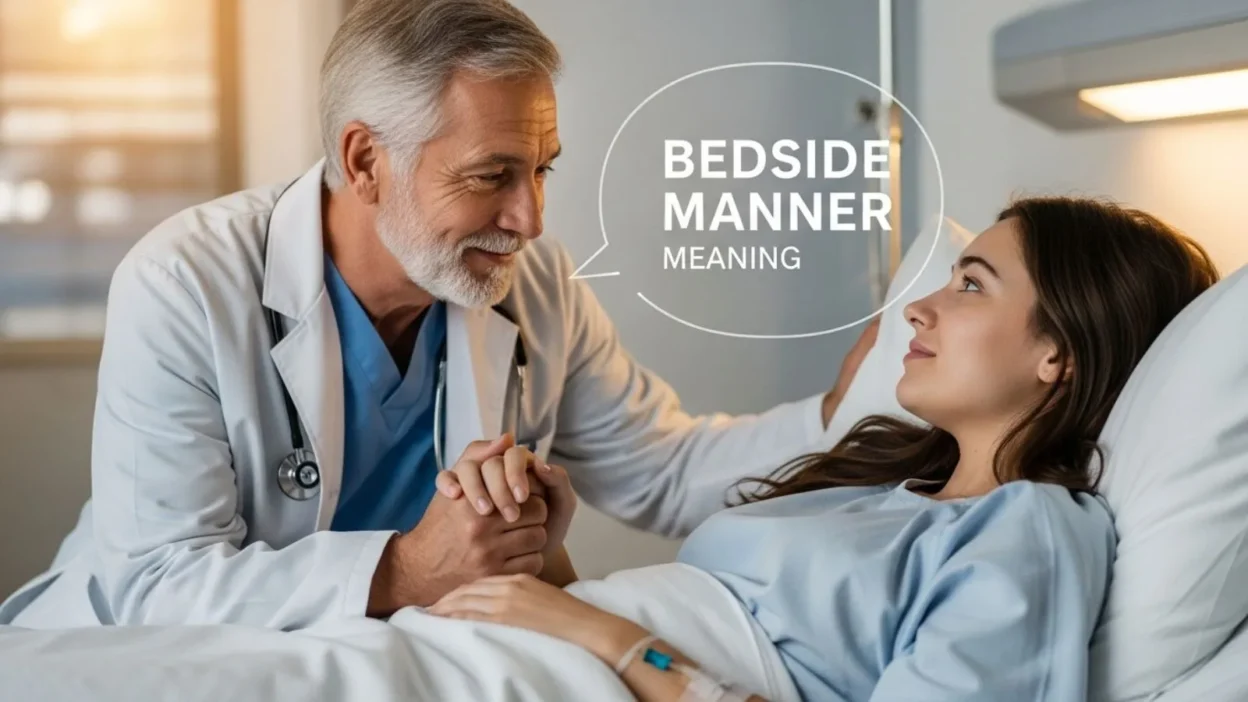
Bedside manner meaning refers to the way a healthcare professional behaves, communicates, and interacts with a patient during medical care.
It is not only about treating an illness but also about how the doctor or nurse makes the patient feel during the process.
In simple terms, it is the combination of professionalism, empathy, respect, and communication skills shown by medical staff at the patient’s bedside.
In healthcare, bedside manner plays a very important role because it directly affects patient experience and trust.
A doctor may have strong medical knowledge, but if they cannot communicate properly or show empathy, patients may feel ignored or uncomfortable.
On the other hand, a doctor with good bedside manner listens carefully, explains conditions in simple language, and reassures patients during stressful situations.
This concept also includes non-verbal communication such as eye contact, facial expressions, tone of voice, and body language. These small details can greatly influence how a patient perceives care.
For example,
A calm and respectful tone can help reduce anxiety, while a rushed or rude attitude may create fear and confusion.
Why Bedside Manner is Important in Healthcare
Bedside manner is extremely important in healthcare because it directly influences how patients feel, understand their condition, and respond to treatment. It is not just a soft skill—it is a core part of effective medical care that connects human emotion with medical science.
One of the biggest reasons bedside manner matters is trust. When a doctor communicates in a calm, respectful, and empathetic way, patients feel more confident in their treatment. This trust encourages patients to follow medical advice properly, take medications on time, and return for follow-ups. Without trust, even the best treatment plans may fail.
Another important factor is reducing fear and anxiety. Many patients feel nervous when visiting hospitals or receiving a diagnosis. A doctor with good bedside manner can ease this stress by explaining things clearly and reassuring the patient. Simple words, a kind tone, and active listening can make a huge difference in emotional comfort.
Bedside manner also improves communication between doctor and patient. When patients feel heard, they are more likely to share accurate symptoms and concerns. This helps doctors make better and more accurate diagnoses.
In addition, it contributes to faster recovery. Studies show that positive emotional support can improve healing outcomes because patients feel more relaxed and cooperative during treatment.
Lastly, bedside manner enhances the reputation of healthcare institutions. Hospitals known for caring and respectful staff attract more patients and build long-term credibility.
Overall, bedside manner is essential because it combines medical expertise with human connection, making healthcare more effective, compassionate, and patient-centered.
Key Elements of Good Bedside Manner
Good bedside manner is built on several essential elements that work together to create a positive and supportive experience for patients. These elements are not just about being polite—they are about forming a strong human connection while delivering medical care.
One of the most important elements is empathy. Empathy means understanding the patient’s feelings, fears, and emotional condition. A doctor who shows empathy can make patients feel valued and cared for, which reduces stress and builds trust.
Another key element is effective communication. This includes explaining medical conditions in simple, clear language without using complicated medical terms. Good communication ensures that patients fully understand their diagnosis, treatment options, and recovery process.
Active listening is also a crucial part of bedside manner. It means paying full attention to the patient without interrupting, showing genuine interest in their concerns, and responding thoughtfully. This helps doctors gather accurate information and makes patients feel heard.
Respect and professionalism are equally important. Treating every patient with dignity, regardless of their background or condition, builds a positive healthcare environment. Respect also includes maintaining privacy and being sensitive to personal issues.
Non-verbal communication such as eye contact, facial expressions, and body language also plays a major role. A calm tone, a reassuring smile, or a gentle gesture can greatly improve patient comfort.
Finally, patience is essential. Some patients may take time to explain their symptoms or may feel anxious. A good healthcare professional remains calm and understanding throughout the interaction.
Together, these elements create a strong bedside manner that improves patient satisfaction, trust, and overall healthcare outcomes.
Examples of Good Bedside Manner
Good bedside manner can be clearly understood through real-life examples of how doctors and healthcare professionals interact with patients in a caring and professional way. These examples show how small actions and behaviors can greatly improve a patient’s experience.
One common example is when a doctor takes time to greet the patient warmly and introduce themselves properly. This simple action helps build comfort and trust right from the beginning of the consultation.
Another example is when a doctor explains a diagnosis in simple, easy-to-understand language instead of using complex medical terms. For instance, instead of saying technical terms, the doctor might explain the condition in a way that a non-medical person can easily understand.
A good bedside manner is also seen when a healthcare professional listens carefully without interrupting the patient. Allowing patients to fully express their symptoms and concerns helps the doctor make a more accurate diagnosis and makes the patient feel respected.
Doctors also demonstrate good bedside manner by showing empathy and emotional support, especially when delivering difficult news. A calm tone, reassuring words, and a compassionate attitude can help reduce the emotional impact on the patient.
Another example is when doctors respect patient privacy and maintain confidentiality, ensuring that personal health information is protected and treated with care.
Additionally, spending a few extra minutes to answer patient questions patiently and clarify doubts also reflects excellent bedside manner.
Overall, these examples show that good bedside manner is not about big actions, but about consistent kindness, clear communication, and genuine care for the patient’s well-being.
Examples of Poor Bedside Manner
Poor bedside manner refers to unprofessional or careless behavior by healthcare professionals that negatively affects patient experience. These behaviors can reduce trust, increase anxiety, and even impact treatment outcomes.
One common example is when a doctor rushes through the consultation without properly listening to the patient. When patients feel ignored or interrupted, they may not fully explain their symptoms, which can lead to incorrect diagnosis.
Another example is using complex medical jargon without explanation. If a doctor speaks in technical terms that the patient cannot understand, it creates confusion and frustration instead of clarity and confidence.
A poor bedside manner is also seen when healthcare professionals avoid eye contact, appear distracted, or focus on screens instead of the patient. This gives the impression that the patient is not important or being taken seriously.
Sometimes, doctors may show rude or impatient behavior, especially in busy hospital environments. Speaking in a harsh tone or showing frustration can make patients feel disrespected and emotionally unsafe.
Another serious example is lack of empathy during difficult situations, such as delivering bad news in a cold or insensitive way. This can increase emotional distress for patients and their families.
Also, failing to answer patient questions or dismissing concerns quickly is a sign of poor communication and weak bedside manner.
In some cases, not maintaining privacy and confidentiality can also harm patient trust and create discomfort.
Overall, poor bedside manner damages the doctor-patient relationship and reduces the quality of healthcare. It highlights the importance of compassion, respect, and effective communication in every medical interaction.
Psychological Impact of Bedside Manner on Patients
Bedside manner has a strong psychological impact on patients because healthcare is not only physical treatment but also an emotional experience. The way a doctor behaves can directly influence a patient’s mental state, stress levels, and overall confidence in recovery.
When a doctor shows kindness, empathy, and patience, it creates a sense of emotional safety. Patients feel that they are being cared for, not just treated as a medical case. This feeling of support can significantly reduce anxiety, fear, and stress, especially in serious illnesses or first-time diagnoses.
A positive bedside manner also helps build trust and reassurance. When patients trust their doctor, they are more likely to follow instructions, take medications correctly, and stay committed to treatment plans. This trust improves both mental comfort and physical recovery outcomes.
On the other hand, poor bedside manner can have negative psychological effects. If a doctor appears rude, rushed, or dismissive, patients may feel ignored or unimportant. This can lead to increased stress, confusion, and even fear of seeking further medical help.
Good communication also plays a major psychological role. Clear explanations help patients understand their condition better, which reduces uncertainty and panic. When patients know what is happening in their body, they feel more in control and less helpless.
In many cases, a supportive doctor can act as a source of emotional strength. Even small gestures like a calm tone, a reassuring smile, or active listening can improve a patient’s mindset.
Role of Communication in Bedside Manner
Communication is one of the most important parts of bedside manner because it shapes how patients understand their health condition and how comfortable they feel during treatment. In healthcare, communication is not just about speaking—it is about listening, explaining, and connecting with patients in a meaningful way.
Verbal communication plays a major role. Doctors must explain diagnoses, treatments, and procedures in simple and clear language. Avoiding complex medical terms helps patients understand their condition better and reduces confusion. When information is delivered in an easy way, patients feel more confident and less anxious about their health.
Equally important is active listening. A good healthcare professional listens carefully to the patient without interrupting. This allows patients to fully describe their symptoms, concerns, and emotions. Active listening also helps doctors gather accurate information, which leads to better diagnosis and treatment decisions.
Non-verbal communication is another key factor. Body language, facial expressions, eye contact, and tone of voice all influence how a patient perceives care. A calm tone, gentle eye contact, and open body language can create a sense of trust and comfort. On the other hand, distracted behavior or lack of attention can make patients feel ignored.
Communication also involves emotional sensitivity. Patients may be scared, confused, or stressed, so the way information is delivered matters just as much as the information itself. A compassionate and respectful tone can greatly improve the patient experience.
In modern healthcare, good communication is considered just as important as medical expertise because it strengthens relationships, improves understanding, and supports better health outcomes.
Bedside Manner in Modern Digital Healthcare (2026 Perspective)
In modern healthcare, especially in 2026, bedside manner has evolved beyond traditional hospital visits. With the rise of digital healthcare and telemedicine, the way doctors interact with patients has changed, but the importance of good bedside manner remains the same.
In telemedicine consultations, doctors communicate through video calls, apps, or online platforms. In this setting, traditional physical presence is missing, so communication skills become even more important. A doctor must focus on tone of voice, facial expressions, and clear verbal explanations to create a sense of trust and connection.
One major challenge in digital healthcare is the lack of physical interaction, which can reduce emotional connection. Patients may feel less comfortable discussing personal health issues online. Therefore, doctors need to practice “digital empathy” by being attentive, patient, and responsive even in virtual environments.
Technology also plays a role in improving healthcare efficiency, but it can sometimes reduce human interaction. For example, AI-based systems and automated reports can speed up diagnosis, but they cannot replace emotional support and understanding provided by a human doctor.
In this modern system, good bedside manner means balancing technology with humanity. Doctors must ensure that patients still feel heard and valued, even when communication is screen-based. Simple actions like maintaining eye contact through the camera, speaking calmly, and giving extra time for questions can improve patient comfort.
Looking ahead, the future of healthcare will likely combine AI tools with human-centered care. However, bedside manner will always remain essential because no technology can fully replace empathy, trust, and emotional connection in healing.
Bedside Manner vs Medical Expertise
Bedside manner and medical expertise are two essential components of effective healthcare, but they serve different purposes. Medical expertise refers to a doctor’s technical knowledge, diagnostic ability, and clinical skills. It includes understanding diseases, performing treatments, interpreting test results, and making accurate medical decisions. On the other hand, bedside manner focuses on how a doctor interacts with patients on a personal and emotional level.
A doctor may have excellent medical expertise but still fail to provide a positive patient experience if their bedside manner is poor. For example, a highly skilled specialist who does not communicate clearly or shows no empathy may leave patients feeling confused, anxious, or even ignored. In contrast, a doctor with good bedside manner builds trust, explains conditions in simple language, and makes patients feel comfortable, even during difficult situations.
Both qualities are equally important in healthcare. Medical expertise ensures correct diagnosis and effective treatment, while bedside manner ensures that patients understand their condition and follow medical advice properly. Without good communication and empathy, even the best treatment plans may not achieve desired results.
Patients today expect more than just medical treatment—they want emotional support, respect, and clear communication. This is why healthcare systems increasingly emphasize patient-centered care, where both clinical skills and interpersonal skills are valued equally.
In real-world practice, the best healthcare professionals are those who combine both strengths. They are not only knowledgeable in medicine but also compassionate, patient, and attentive. This balance leads to better patient satisfaction, improved trust, and more successful health outcomes.
How Doctors Can Improve Bedside Manner
Improving bedside manner is an ongoing process that requires self-awareness, training, and consistent practice. Even highly experienced doctors can enhance their patient interaction skills by focusing on empathy, communication, and emotional intelligence.
One of the most effective ways to improve bedside manner is through active listening. Doctors should give patients enough time to speak without interruption and show genuine interest in their concerns. Nodding, maintaining eye contact, and responding appropriately can make patients feel valued and understood.
Developing emotional intelligence is also very important. This means recognizing patients’ emotions such as fear, anxiety, or confusion and responding in a calm and supportive way. A compassionate attitude helps build trust and reduces patient stress.
Another key improvement method is using simple and clear communication. Doctors should avoid complex medical terms and explain conditions in a way that is easy for patients to understand. When patients clearly understand their diagnosis and treatment, they feel more confident and cooperative.
Training programs and workshops on patient communication skills can also help healthcare professionals improve their bedside manner. These programs often include role-playing, feedback sessions, and real-life case studies to develop better interaction techniques.
Time management is another important factor. Even in busy environments, doctors should try to give patients adequate attention so they do not feel rushed or ignored.
Lastly, patient feedback is a powerful tool for improvement. Listening to patient experiences helps doctors understand their strengths and identify areas that need improvement.
Role of Hospitals in Promoting Good Bedside Manner
Hospitals play a crucial role in shaping and promoting good bedside manner among healthcare professionals. While individual doctors are responsible for their behavior, the hospital environment, policies, and training systems strongly influence how patients are treated.
One of the most effective ways hospitals promote good bedside manner is through training programs and workshops. These programs teach doctors, nurses, and staff how to communicate effectively, show empathy, and handle patients with respect. Regular training helps reinforce patient-centered care and improves overall service quality.
Hospitals also set professional standards and codes of conduct. These guidelines ensure that all medical staff treat patients with dignity, maintain privacy, and communicate clearly. When these standards are strictly followed, the quality of patient interaction improves significantly.
Another important factor is performance evaluation and feedback systems. Many hospitals now collect patient feedback to assess how staff interact with them. This feedback helps identify areas where bedside manner can be improved and encourages accountability among healthcare workers.
Hospitals can also promote a positive culture by encouraging teamwork and compassion-based care. When senior doctors and administrators demonstrate good bedside manner, junior staff are more likely to follow the same behavior.
Additionally, improving working conditions such as reducing workload and providing adequate staff support allows healthcare professionals to spend more time with patients, which naturally improves communication and care quality.
In modern healthcare systems, hospitals are not just treatment centers—they are also responsible for creating an environment where empathy, respect, and communication are prioritized. This leads to better patient satisfaction and stronger healthcare outcomes.
Real-Life Case Studies of Bedside Manner
Real-life case studies help us clearly understand how bedside manner can significantly affect patient experiences and healthcare outcomes. These examples show both positive and negative situations in real medical environments.
In one positive case, a patient visiting a hospital for a serious diagnosis was very anxious and confused. The doctor took extra time to sit with the patient, explain the condition in simple words, and answer all questions patiently. The doctor also used a calm tone and reassuring words. As a result, the patient felt supported, trusted the treatment plan, and followed all medical instructions properly. This led to a smoother recovery process and a positive hospital experience.
In contrast, a negative case involved a busy emergency department where a doctor was rushed and impatient. The patient was trying to explain symptoms, but the doctor interrupted frequently and used complex medical language. The patient felt ignored and confused, which created fear and lack of trust. Later, the patient even delayed follow-up visits due to dissatisfaction with the interaction, which negatively impacted their health condition.
Another example comes from pediatric care, where a doctor used a friendly and gentle approach while treating a child. By speaking softly, smiling, and involving the parents in the discussion, the doctor helped reduce the child’s fear and made the entire treatment process easier.
These case studies clearly show that bedside manner is not just about medical treatment—it is about human connection. Good bedside manner improves trust, cooperation, and recovery, while poor interaction can lead to stress, misunderstanding, and weaker health outcomes.
Common Misconceptions About Bedside Manner
There are several common misconceptions about bedside manner that often lead to misunderstanding its true importance in healthcare. Many people think it is just a soft skill or a secondary part of medical practice, but in reality, it plays a major role in patient care and recovery.
One major misconception is that bedside manner simply means being polite or friendly. While politeness is a part of it, bedside manner is much deeper. It includes empathy, communication skills, active listening, emotional intelligence, and the ability to make patients feel safe and understood.
Another misunderstanding is that bedside manner is not as important as medical expertise. In truth, both are equally important. A highly skilled doctor with poor communication skills may still struggle to build trust with patients, which can affect treatment success.
Some people also believe that only naturally “kind” doctors can have good bedside manner. However, this is not true. Bedside manner can be learned and improved through training, experience, and conscious effort. Communication skills and empathy can be developed over time.
Another misconception is that bedside manner takes too much time in busy hospitals. While time can be limited, even small actions like listening carefully, explaining clearly, or showing respect can greatly improve patient experience without requiring extra time.
Lastly, some assume that bedside manner is only important in serious illnesses. In reality, it matters in all healthcare situations, from routine checkups to emergency care.
Future of Bedside Manner in Healthcare
The future of bedside manner in healthcare is evolving rapidly as technology, patient expectations, and medical practices continue to advance. In 2026 and beyond, healthcare is becoming more patient-centered, meaning that emotional connection and communication will remain just as important as medical treatment.
One major trend shaping the future is the rise of AI and digital healthcare systems. While artificial intelligence can help with diagnosis, data analysis, and treatment recommendations, it cannot replace human empathy. This makes bedside manner even more important, as doctors will need to provide the emotional support that technology cannot offer.
Another key development is the growth of telemedicine and virtual consultations. As more patients consult doctors online, communication skills such as tone of voice, clarity, and digital empathy will become essential. Doctors will need to ensure that patients still feel heard and cared for, even without physical presence.
The future will also focus more on patient experience and satisfaction metrics. Hospitals and healthcare systems are increasingly using patient feedback to evaluate the quality of care, including bedside manner. This will encourage medical professionals to improve their interpersonal skills continuously.
Medical education is also expected to place greater emphasis on communication training and emotional intelligence, ensuring that future doctors are well-equipped to handle both clinical and emotional aspects of care.
Overall, the future of bedside manner will blend technology with human compassion. While machines may support medical decisions, the human touch—empathy, understanding, and trust—will always remain at the heart of effective healthcare.
FAQs about Bedside Manner Meaning
1. What is bedside manner meaning in simple words?
Bedside manner meaning refers to how a doctor or healthcare professional behaves and communicates with patients. It includes empathy, respect, communication skills, and overall attitude during treatment or consultation. It is about making patients feel comfortable and understood.
2. Why is bedside manner important in healthcare?
Bedside manner is important because it builds trust between patients and doctors. It helps reduce fear and anxiety, improves communication, and encourages patients to follow medical advice properly. A good bedside manner can also improve recovery outcomes.
3. What are examples of good bedside manner?
Good bedside manner includes listening carefully to patients, explaining medical conditions in simple language, showing empathy, maintaining eye contact, and respecting patient concerns. A calm and supportive attitude is also a key example.
4. What is bad bedside manner?
Bad bedside manner includes ignoring patients, rushing consultations, using complex medical terms without explanation, being rude or impatient, and showing lack of empathy. This behavior can make patients feel stressed or unimportant.
5. Can bedside manner be learned or improved?
Yes, bedside manner can definitely be improved. Doctors can develop it through communication training, practicing empathy, improving listening skills, and learning emotional intelligence. Experience and patient feedback also help in improvement.
6. Is bedside manner as important as medical skills?
Yes, both are equally important. Medical skills ensure correct treatment, while bedside manner ensures trust, understanding, and patient cooperation. Together, they create better healthcare outcomes.
Conclusion
In conclusion, bedside manner meaning goes far beyond simple politeness in healthcare. It represents the way doctors and healthcare professionals communicate, behave, and emotionally connect with their patients during treatment.
A strong bedside manner combines empathy, respect, active listening, and clear communication, all of which help create trust and comfort.
Good bedside manner not only improves patient satisfaction but also plays a direct role in recovery by reducing fear, stress, and confusion.
On the other hand, poor bedside manner can negatively affect patient experience and weaken the doctor-patient relationship, even if medical treatment is correct.
In modern healthcare, especially with the rise of digital medicine and AI tools, the human touch has become even more valuable. Technology can assist in diagnosis, but it cannot replace compassion and emotional understanding.