
The word “rally” is a versatile term that appears in everyday conversations, sports, politics, and even the stock market. At its core, to rally means to come together, recover, or gather strength, but its exact meaning depends heavily on the context.
In sports like tennis or badminton, a rally refers to a series of consecutive hits exchanged between players. In the financial world, a stock market rally describes a significant upward movement in stock prices.
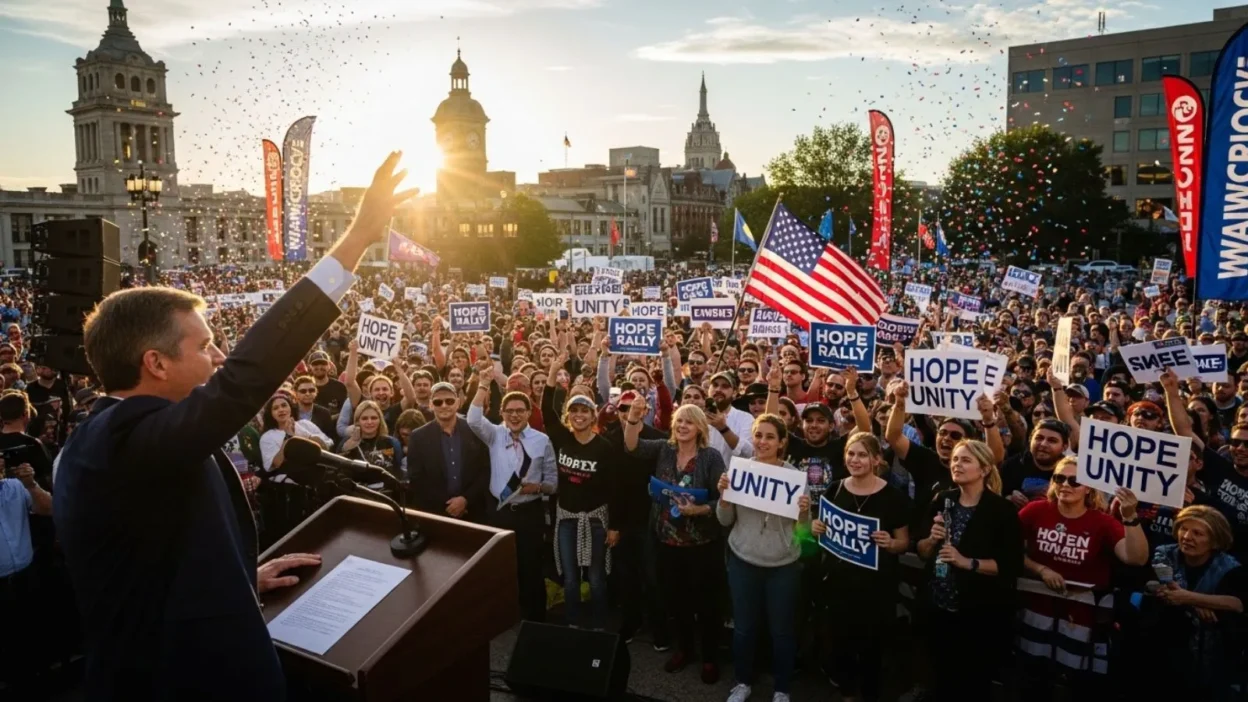
Political rallies, on the other hand, are gatherings of supporters showing unity and enthusiasm for a cause or candidate.
Understanding the different uses of the word can help you communicate more clearly and avoid confusion.
This article explores the definition, origin, examples, and types of rallies, along with practical tips on how to use the word in sentences. By the end, you’ll have a complete understanding of what it means to rally.
What Does Rally Mean?
The word “rally” is a dynamic term that can function as both a noun and a verb, making it versatile in everyday language. Generally, to rally means to come together, recover, or unite for a purpose. As a verb, it can describe the act of gathering people or resources to strengthen a position, overcome challenges, or encourage support. For example, one might say, “The community rallied to help those affected by the flood,” illustrating collective action and solidarity.
As a noun, a rally can refer to an organized event or a series of actions. For instance, “The tennis match featured a long rally that lasted over thirty shots” highlights the use in sports. Similarly, in a social or political context, a rally may describe a planned gathering of supporters, such as “Thousands attended the rally to support the environmental campaign.”
The meaning of “rally” is highly context-dependent. In casual conversation, it can indicate recovery, as in, “After a slow start, the team rallied to win the game.” In business or finance, it might signify an upward trend, like “The stock market rallied after positive earnings reports.”
Understanding the general sense of the word is the first step in mastering its multiple applications. Recognizing whether it refers to gathering, recovery, or a competitive sequence will help you use the word accurately and naturally in both spoken and written English.
Rally in Sports
In sports, the term “rally” has a very specific meaning and is commonly used in games like tennis, badminton, table tennis, and volleyball. A rally refers to a series of consecutive shots or plays between opponents that continues until a point is scored. It’s a fundamental aspect of many competitive sports because it tests skill, stamina, and strategy. For example, in tennis, a rally begins when a player serves the ball and continues as both players hit the ball back and forth until one fails to return it.
Rallies can vary in length, from just a few hits to long, intense exchanges that keep spectators on the edge of their seats. The term is also used in motorsports, such as rally racing, where participants compete in timed stages over different terrains, testing driving skill and vehicle endurance.
Understanding sports rallies is important not only for players but also for fans, as it helps in appreciating the tactics and momentum shifts within a match. For instance, a long rally in badminton might demonstrate a player’s quick reflexes and strategic shot placement. Coaches often emphasize the ability to maintain focus and energy during rallies, as this can determine the outcome of the game.
In short, a sports rally represents both action and challenge, highlighting athletic skill and perseverance. It’s a clear example of how the word “rally” reflects continuous effort and engagement in a competitive context.
Rally in the Stock Market
In the context of finance, a rally refers to a significant upward movement in stock prices, indices, or other financial assets over a relatively short period. It often follows a period of decline or stagnation, signaling renewed investor confidence or positive market sentiment. For example, one might say, “Tech stocks rallied after strong quarterly earnings were announced,” highlighting the recovery and surge in value.
Stock market rallies can be short-term or long-term. Short-term rallies, sometimes called intraday or weekly rallies, may occur due to favorable news, economic reports, or corporate announcements. Long-term rallies, on the other hand, are more sustained and often indicate a broader bullish trend in the market. Understanding the difference is crucial for investors, as it can influence trading strategies and investment decisions.
Rallies are often driven by a mix of factors, including government policies, investor optimism, corporate performance, and global economic trends. During a rally, trading volumes typically increase, and market indices may reach new highs. Terms like “bull market rally” are common in financial discussions, describing periods when stock prices are consistently climbing.
Just as in sports or social contexts, the concept of a rally in finance emphasizes momentum and collective action—in this case, the collective buying behavior of investors. Recognizing market rallies helps both beginners and seasoned traders anticipate opportunities, manage risks, and make informed decisions in a constantly changing financial landscape.
Political Rally Meaning
A political rally is a public gathering of supporters organized to promote a political cause, candidate, or policy. Political rallies serve as a platform for leaders to connect with the public, share their vision, and encourage civic participation. They can be small, local events or massive gatherings with thousands of attendees, depending on the significance of the campaign or movement.
The main purpose of a political rally is to mobilize support. For instance, campaign rallies are often held during election seasons to energize voters, inspire volunteers, and increase visibility for candidates. Speeches, banners, chants, and slogans are common features that help convey the rally’s message and generate enthusiasm. Political rallies also provide an opportunity for participants to network, show solidarity, and feel part of a larger movement.
Historically, political rallies have been used to influence public opinion and shape political outcomes. Famous examples include rallies led by influential leaders such as Franklin D. Roosevelt, Martin Luther King Jr., and Winston Churchill. In modern times, rallies continue to play a crucial role in democracy, as they allow citizens to express opinions, protest policies, or celebrate achievements.
In short, a political rally embodies the idea of unity, collective action, and shared purpose. It is a powerful tool for communication, persuasion, and public engagement, showing how the word “rally” extends beyond physical gatherings to symbolize strength, motivation, and collaboration in the political sphere.
Origin and Etymology of “Rally”
The word “rally” has a rich linguistic history that helps explain its versatile usage today. It originated from the Old French word “ralier”, which means “to unite” or “to bring together”. This root itself comes from combining “re-” (again) with “alier” (to unite), emphasizing the idea of gathering people or forces once more. Over time, the word evolved in Middle English to become “rallyen,” retaining the core meaning of coming together or recovering strength.
Historically, “rally” was first used in military contexts, describing troops regrouping after a defeat or retreat. This military origin highlights the word’s connection with strength, perseverance, and collective effort. As English developed, the term expanded beyond the battlefield to include social gatherings, sports, political events, and even financial contexts.
In the 19th and 20th centuries, “rally” became widely used in sports and politics, reflecting both competitive sequences in games and public assemblies of supporters. By the mid-20th century, the term was adopted in finance to describe the upward movement of stock prices, showing how language evolves alongside societal and economic developments.
Understanding the etymology of “rally” provides insight into why it consistently conveys ideas of unity, recovery, and momentum. Whether in conversation, sports, or markets, knowing its origin helps you appreciate the word’s depth and versatility, making it easier to use accurately in different contexts.
How to Use Rally in a Sentence
Knowing the meaning of “rally” is one thing, but using it correctly in sentences is essential to communicate clearly. The word can function as both a verb and a noun, and its usage varies depending on the context—general, sports, political, or financial.
As a verb, “rally” often conveys coming together or recovering strength.
For example:
- “The team rallied after a slow start and won the game.”
- “Citizens rallied to support the local shelter after the storm.”
As a noun, “rally” can refer to an organized event or continuous activity. Examples include:
- “The tennis match featured a 20-shot rally.”
- “Thousands attended the political rally to support the new policy.”
In finance, “rally” describes an upward movement in stock prices. For instance:
- “Tech stocks rallied following strong quarterly earnings.”
Sports, politics, and finance are not the only contexts. You can also use “rally” in everyday conversation to indicate recovery or momentum:
- “After feeling unwell all week, she finally rallied and returned to work.”
- “The company rallied its employees to complete the project on time.”
Using “rally” effectively depends on understanding the intended meaning and context. By practicing these examples, you can incorporate the word naturally in both spoken and written English, whether you are describing people, events, or market trends.
Types of Rallies
The word “rally” can describe different types of gatherings, movements, or sequences depending on the context. Understanding the types of rallies helps clarify its meaning and usage in various scenarios, including sports, politics, social events, and finance.
- Sports Rallies – In sports like tennis, badminton, and table tennis, a rally refers to a series of consecutive shots exchanged between players. The length and intensity of a rally often determine the outcome of a game, as it tests both skill and endurance. Coaches emphasize maintaining focus during rallies to gain an advantage.
- Political Rallies – These are public gatherings organized to support a political cause, candidate, or policy. Political rallies are designed to motivate supporters, spread awareness, and influence public opinion. They often include speeches, slogans, banners, and coordinated activities to unify participants and create momentum.
- Social or Community Rallies – Social rallies bring people together for charity, awareness, or community causes. For example, a neighborhood might rally to clean a park, or a group may organize a fundraiser rally. The focus is on collective action and shared purpose.
- Financial/Market Rallies – In finance, a rally represents a sudden or sustained increase in stock prices or market indices. Investors participate in rallies to capitalize on growth and trends, making rallies an essential concept in trading strategies.
Each type of rally shares a common theme: momentum, unity, and collective effort. Recognizing these categories helps you use the word accurately in conversation, writing, and analysis across different fields.
Common Phrases and Idioms with Rally
The word “rally” is not only used in its literal sense but also appears in many idioms and common phrases. These expressions extend the meaning of the word and are often used figuratively to convey unity, support, or momentum.
One popular phrase is “rally around the flag,” which means to unite in support of a common cause or leader, especially in times of crisis. For example: “During the natural disaster, the citizens rallied around the flag to support rescue efforts.” This expression highlights the idea of collective action and solidarity.
Another common idiom is “rally the troops,” meaning to motivate a group of people to take action or persevere through a challenge. For instance: “The coach rallied the troops before the final match, inspiring them to give their best performance.” It emphasizes leadership, encouragement, and group effort.
In the financial world, phrases like “market rally” or “stock rally” are frequently used to describe a sudden upward movement in prices, such as: “After positive economic reports, the market rallied sharply.”
Understanding these phrases allows you to use “rally” more creatively in both writing and conversation. By combining the literal and figurative meanings, you can describe not only physical gatherings or sequences but also metaphorical concepts like motivation, recovery, and progress.
Including these idioms in your vocabulary makes your language richer, more expressive, and contextually accurate, showcasing the versatility of the word “rally.”
Rally vs Other Similar Words
The word “rally” is versatile, but it is often confused with similar words such as gather, assemble, recover, and unite. Understanding the subtle differences can help you use each term accurately in different contexts.
Rally vs Gather: While both involve bringing people or things together, “gather” is more general and neutral. For example, “People gathered at the park for a picnic” does not imply recovery or motivation, whereas “The community rallied to support the flood victims” emphasizes action, purpose, and collective effort.
Rally vs Assemble: “Assemble” is formal and often used in structured settings like meetings or manufacturing. “Employees assembled in the conference hall” indicates organization, but lacks the energy or momentum implied by “rally.”
Rally vs Recover: “Recover” focuses on returning to a previous state, such as health or strength. In contrast, “rally” adds the element of collective or strategic action, e.g., “The team recovered after halftime” vs “The team rallied after halftime”—the latter suggests motivation and group effort.
Rally vs Unite: “Unite” highlights joining together, often for a shared purpose, but can feel abstract. “Rally” combines unity with energy, action, or momentum, making it more dynamic. For instance, “Citizens united to support the cause” vs “Citizens rallied to support the cause”—the second conveys enthusiasm and immediacy.
By comparing rally with similar words, you can understand its unique nuances. It’s a term that blends action, recovery, and collective effort, making it suitable for sports, politics, finance, and everyday conversation.
Fun Facts About Rally
The word “rally” is not only versatile but also comes with several interesting facts that make it unique in language, sports, politics, and finance. Exploring these fun insights can deepen your understanding and make using the word more engaging.
In sports, the longest tennis rally on record lasted an incredible 29 minutes with 643 shots between Vicki Nelson-Dunbar and Jean Hepner in 1984. This shows how a rally can test endurance, focus, and skill, turning it into an exciting and memorable part of the game. Similarly, rallies in badminton, table tennis, and volleyball highlight the importance of momentum and strategy in competitive sports.
In politics, rallies have historically influenced elections and movements. For example, Franklin D. Roosevelt’s fireside chats often followed rallies that helped unite citizens during difficult times, demonstrating the power of collective action and public motivation. Modern political rallies, from presidential campaigns to grassroots events, continue to showcase energy, enthusiasm, and solidarity.
In finance, the term “rally” describes upward movements in the stock market. Famous market rallies, like the post-2008 financial recovery, illustrate how investor confidence can surge and create momentum in trading.
Even linguistically, it’s fascinating that the word originated from Old French “ralier,” meaning “to unite”, reflecting centuries of evolving use. From sports courts to political arenas and financial charts, the word has consistently represented energy, unity, and momentum.
Frequently Asked Questions (FAQ)
1. What does it mean to rally in tennis?
In tennis, a rally refers to a series of consecutive shots exchanged between players. The rally continues until one player fails to return the ball, making it a key part of the game’s strategy and excitement.
2. What is a political rally?
A political rally is a public gathering of supporters organized to promote a candidate, party, or cause. It often includes speeches, banners, and slogans to inspire and unite participants.
3. How is “rally” used in business or finance?
In finance, a rally describes a significant upward movement in stock prices or market indices. It can be short-term or long-term and usually indicates renewed investor confidence.
4. Can “rally” be both a noun and a verb?
Yes. As a verb, it means to gather, recover, or unite, e.g., “The team rallied after halftime.” As a noun, it refers to an organized event or sequence, e.g., “The tennis match featured a long rally.”
5. What are common phrases or idioms with “rally”?
Popular phrases include:
- “Rally around the flag” – unite for a cause
- “Rally the troops” – motivate a group to take action
- “Market rally” – upward surge in financial markets
6. What is the origin of the word “rally”?
“Rally” comes from the Old French word “ralier,” meaning to unite or bring together. It was first used in military contexts and gradually expanded to sports, politics, and finance.
7. What are synonyms of “rally”?
Depending on context, synonyms include gather, assemble, recover, unite, or surge. Each synonym conveys a slightly different nuance, so context matters when choosing the right word.
Conclusion
The word “rally” is a powerful and versatile term that can convey unity, recovery, momentum, and collective effort across a variety of contexts.
From sports rallies, where players exchange consecutive shots, to political rallies that inspire and mobilize supporters, and even financial rallies signaling market upswings, the word adapts seamlessly to different scenarios.
Understanding its origin from Old French “ralier,” meaning to unite, helps explain why it consistently emphasizes action and togetherness.
By learning how to use “rally” as both a noun and a verb, and exploring its common phrases, idioms, and examples, you can communicate more clearly and confidently.
If in everyday conversation, professional settings, or creative writing, knowing the multiple meanings and applications of “rally” empowers you to express ideas of strength, motivation, and collective action effectively.