Ever received a message with “OTP” and wondered what it actually means? You’re not alone.
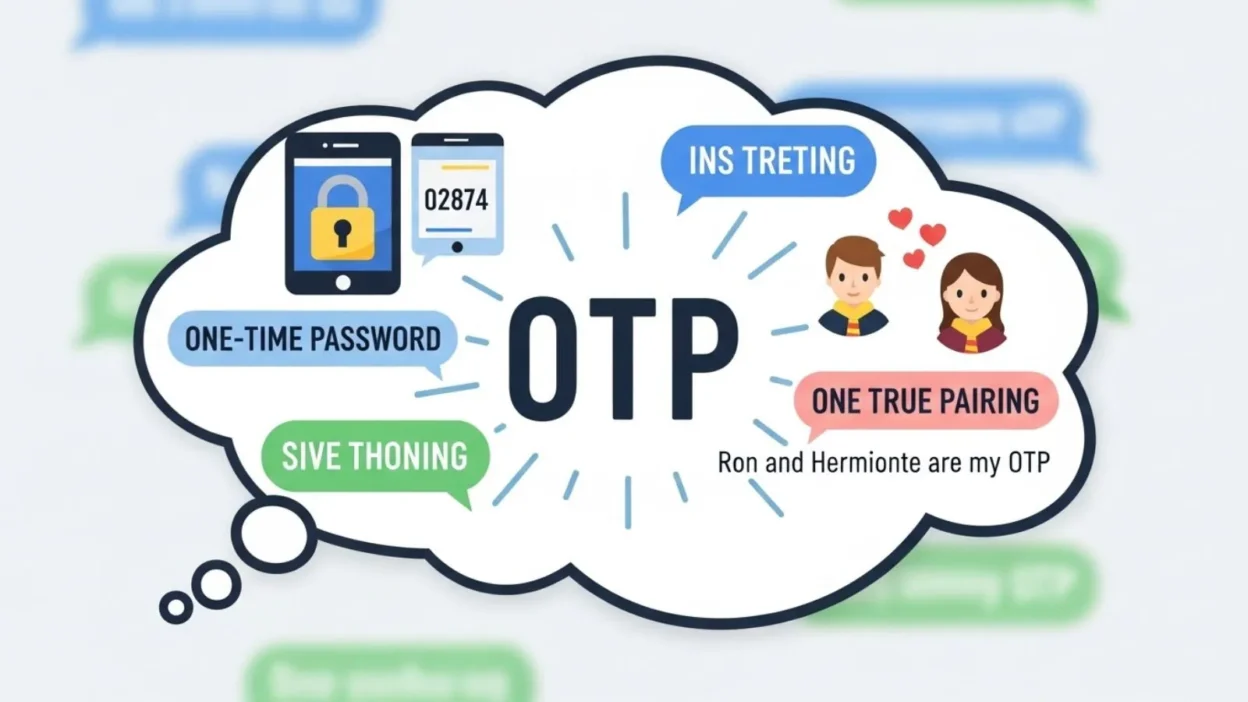
The term OTP meaning in text can be confusing because it has more than one meaning depending on the situation. In some cases, OTP refers to a One-Time Password, a secure code used for logging into accounts or verifying your identity.
In other contexts, especially on social media or in casual chats, OTP stands for One True Pairing, which describes a favorite romantic couple or “ship.”
Understanding the difference is important so you don’t misinterpret a message or respond incorrectly. In this guide, you’ll learn the exact meaning of OTP in texting, how it’s used in real conversations, and how to quickly recognize its meaning based on context.
What Does OTP Mean in Text?
The OTP meaning in text depends entirely on the context of the conversation, which is why it often confuses people. In simple terms, OTP has two main meanings—one related to security and the other to online slang.
First, OTP commonly stands for One-Time Password. This is a temporary code sent to your phone, email, or app when you try to log in, make a payment, or verify your identity. It is used for security purposes and usually expires within a few minutes. For example, a message like “Enter the OTP sent to your number” clearly refers to a verification code.
Second, in casual texting and social media, OTP means One True Pairing. This is popular in fandoms and online communities, where people use it to describe their favorite romantic couple—whether real or fictional. For example, someone might say, “They are my OTP ❤️,” meaning they love that couple together.
So, how do you know which meaning is being used? The answer lies in the situation. If the conversation is about accounts, banking, or security, OTP means password. If it’s about relationships, shows, or emotions, it means a perfect couple. Understanding this simple difference helps you quickly interpret messages without confusion.
OTP Full Form Explained
To fully understand the OTP meaning in text, it helps to break down its full forms and how each one is used in real life. Even though the abbreviation is the same, the meanings are completely different depending on the situation.
OTP as One-Time Password
In a technical or security context, OTP stands for One-Time Password. This is a unique, temporary code sent to you when you try to log into an account, confirm a transaction, or verify your identity. It adds an extra layer of protection, making it harder for unauthorized users to access your information. For example, when you sign in to your bank account or a social media app, you may receive a 4–6 digit code via SMS or email. That code is your OTP, and it usually expires quickly for safety reasons.
OTP as One True Pairing
In a completely different context, OTP also means One True Pairing. This term is widely used in fandoms, online communities, and social media platforms. It refers to a couple that someone strongly supports or loves seeing together. It could be characters from a TV show, movie, or even real-life celebrities. For example, a fan might say, “They are my OTP 😍,” to express their admiration for that pair.
OTP Meaning in Texting and Chat
The OTP meaning in text becomes clearer when you see how people actually use it in everyday conversations. In texting and chat, OTP is used in both formal and casual ways, and the tone of the message usually reveals its meaning.
In formal or important conversations, OTP almost always refers to a One-Time Password. For example, if you’re logging into an account or making an online payment, you might receive a message like, “Please enter the OTP to continue.” In this case, the word is used strictly for security purposes, and the conversation is usually serious and direct. There’s no emotional tone—just instructions.
On the other hand, in casual chats with friends or on social media, OTP usually means One True Pairing. Here, it carries an emotional or expressive tone. People use it to talk about couples they love or support. For example, a friend might text, “They are such an OTP ❤️,” especially when discussing a movie, TV show, or even real-life relationships.
Another key difference is how it appears in sentences. The security meaning often comes with numbers, codes, or actions like “enter” or “verify.” Meanwhile, the slang meaning is often paired with emojis, excitement, or opinions.
OTP Meaning on Social Media
The OTP meaning in text becomes even more interesting when you look at how it’s used across different social media platforms. While the core meanings stay the same, the way people use OTP can vary depending on where the conversation is happening.
On platforms like Instagram and TikTok, OTP is most commonly used as One True Pairing. Users often post photos, edits, or short videos of their favorite couples and caption them with phrases like “My OTP forever 💕.” In this context, it’s all about expressing admiration, love, or excitement for a romantic duo—whether they are fictional characters or real-life celebrities.
In messaging apps like WhatsApp, OTP can have both meanings. If you receive a message from a company or service, OTP almost always means One-Time Password used for verification. For example, banks, apps, or websites may send an OTP to confirm your identity. However, in personal chats with friends, the same term can switch to the slang meaning, especially when discussing relationships or entertainment.
The key difference on social media is the tone. Posts, captions, and comments usually lean toward the romantic or fandom meaning, while private or automated messages often relate to security. By noticing where the message appears and who sent it, you can easily understand which meaning of OTP is being used.
How to Know Which OTP Meaning Is Used
Understanding the OTP meaning in text becomes easy once you learn how to read the context of a message. Since OTP can mean both One-Time Password and One True Pairing, the key is to look at the situation, tone, and surrounding words.
Start by asking yourself what the conversation is about. If the message is related to logging in, banking, payments, or account verification, OTP almost always means a One-Time Password. You’ll often see words like “enter,” “verify,” “code,” or “security” in the same message. For example, “Use this OTP to confirm your login” clearly points to a password.
On the other hand, if the conversation is about relationships, movies, TV shows, or celebrities, OTP usually means One True Pairing. In these cases, the tone is more emotional or expressive. Messages might include emojis like ❤️😍 or phrases showing excitement, such as “They are my OTP!”
Another helpful clue is who sent the message. Automated messages from apps, banks, or websites almost always use OTP in the security sense. Meanwhile, friends, fans, or social media users are more likely using it as slang.
Examples of OTP in Text Messages
Seeing real examples can make the OTP meaning in text much easier to understand. Since OTP has two main meanings, here are simple, everyday examples showing how it’s used in both contexts.
🔐 OTP as One-Time Password (Security Use)
- “Your OTP is 482913. Do not share it with anyone.”
- “Enter the OTP sent to your phone to continue login.”
- “Use this OTP to verify your payment.”
- “I didn’t receive the OTP yet, can you resend it?”
In these examples, OTP clearly refers to a verification code. The tone is serious, and the message usually includes numbers or instructions.
💕 OTP as One True Pairing (Slang Use)
- “They are my OTP 😍”
- “I can’t believe they broke up, they were my OTP 💔”
- “This couple is such an OTP ❤️”
- “From episode one, I knew they’d be my OTP!”
Here, OTP is used in a fun, emotional way to describe a favorite couple.
💬 Mixed Chat Example
- Friend 1: “Did you get the OTP?”
- Friend 2: “Yeah, I just entered it to log in.”
Vs.
- Friend 1: “Do you ship them?”
- Friend 2: “Of course! They’re my OTP ❤️”
These examples show how context completely changes the meaning. Once you recognize the tone and topic, understanding OTP becomes simple and natural.
OTP Meaning in Security (Important)
One of the most important meanings of OTP in text is One-Time Password, especially in the world of online security. This type of OTP is a temporary code that is used to verify your identity when you are logging into an account, making an online payment, or accessing sensitive information.
A One-Time Password is usually a 4 to 6 digit code sent to your mobile number, email, or an authentication app. For example, when you log in to your bank account or social media profile, you might receive a message like: “Your OTP is 739102. It is valid for 5 minutes.” This code ensures that only the real account owner can complete the action.
The main purpose of OTPs is to add an extra layer of protection called two-factor authentication (2FA). Even if someone knows your password, they cannot access your account without the OTP. This makes online accounts much safer.
OTPs are widely used in:
- Online banking transactions
- Social media logins
- Email account verification
- E-commerce purchases
- App sign-ins
It is very important to remember that OTPs are private and sensitive. No legitimate company will ever ask you to share your OTP with anyone. If someone requests it, it is often a scam attempt.
Understanding this meaning of OTP helps you stay safe while using digital services and protects your personal data from unauthorized access.
Is It Safe to Share Your OTP?
When learning the OTP meaning in text, one of the most important things to understand is safety. If OTP refers to a One-Time Password, then the answer is very clear: you should never share it with anyone.
A One-Time Password is designed to protect your accounts. It is used to confirm that you are the real owner when logging in, making payments, or verifying identity. This code is temporary and usually expires within a few minutes, which makes it very secure. However, this security only works if you keep it private.
Unfortunately, scammers often try to trick people into sharing their OTP. They may call, text, or message pretending to be from a bank, delivery service, or online platform. They might say things like “Tell us the OTP to verify your account” or “Share the code to complete your refund.” These are fraud attempts.
Here are some important safety tips:
- Never share your OTP with anyone, not even friends or family
- No bank or official company will ever ask for your OTP
- Always double-check messages before responding
- If something feels suspicious, ignore it and contact the official service directly
If you accidentally share your OTP, your account could be hacked or misused within seconds. That’s why OTPs are considered highly confidential security codes.
Common Misunderstandings About OTP
Even though the OTP meaning in text is simple once you understand it, many people still get confused because it has more than one use. This often leads to misunderstandings in conversations, especially for beginners or new internet users.
One common mistake is thinking OTP only means a One-Time Password. While this is true in banking, apps, and security systems, it is not the only meaning. In online chats and social media, OTP can also mean One True Pairing, which refers to a favorite couple or romantic duo. Because of this difference, people sometimes misread messages and get confused about what someone is trying to say.
Another misunderstanding happens when people assume OTP always has something to do with passwords. For example, if someone says “They are my OTP,” it has nothing to do with security—it’s actually an emotional or fan-based expression. Without context, this can be misleading.
Some users also mistakenly think OTP can be shared safely in all situations. This is dangerous because the security OTP must never be shared, while the slang OTP is just a casual expression and not sensitive information.
The key issue behind all these misunderstandings is lack of context awareness. People often see the abbreviation and immediately assume one meaning without reading the full message or understanding the situation.
Other Popular Text Slang Like OTP
To better understand the OTP meaning in text, it also helps to learn other common internet slang terms used in everyday chatting. Like OTP, many abbreviations have become popular because people want to type faster and communicate quickly on social media and messaging apps.
Here are some widely used text slang examples:
- BRB (Be Right Back): Used when someone leaves a conversation temporarily.
- LOL (Laugh Out Loud): Used when something is funny or amusing.
- IMO (In My Opinion): Used when sharing personal thoughts or views.
- IDK (I Don’t Know): Used when someone is unsure about something.
- TBH (To Be Honest): Used when someone is being direct or honest.
- DM (Direct Message): Used for private messages on social platforms.
- FYI (For Your Information): Used to share useful or important info.
- SMH (Shaking My Head): Used to show disappointment or disbelief.
Just like OTP, these abbreviations can also change meaning depending on context. That’s why it’s important to understand not only the full form but also how and where it is used in conversation.
Learning these slang terms makes online communication easier, faster, and more natural. It also helps you understand messages correctly without confusion. As digital communication continues to grow, knowing common text slang like OTP and others has become an essential part of everyday chatting.
Frequently Asked Questions (FAQs)
❓ What does OTP mean in texting?
In texting, OTP meaning in text can be either One-Time Password (a security code) or One True Pairing (a favorite couple). The meaning depends on the context of the conversation.
❓ Does OTP always mean One-Time Password?
No. OTP does not always mean a password. While it is commonly used for security verification, it is also widely used as slang in social media and fandom communities.
❓ What does OTP mean in love or relationships?
In love or relationship contexts, OTP means One True Pairing. It refers to a couple that someone strongly supports or thinks is perfect together, such as characters or real-life pairs.
❓ Is OTP used on Instagram or TikTok?
Yes, OTP is very popular on Instagram, TikTok, and other social media platforms. Users often use it in captions or comments to express love for a couple or pairing.
❓ Can OTP have multiple meanings?
Yes, OTP has two main meanings. One is technical (One-Time Password) and the other is slang (One True Pairing). Understanding context helps you know which one is being used.
❓ Is it safe to share an OTP code?
No. If OTP refers to a One-Time Password, you should never share it with anyone. It is private and used for account security only.
Conclusion
Understanding the OTP meaning in text is important because it helps avoid confusion in both casual chats and serious situations.
OTP can mean One-Time Password, which is used for secure login, payments, and account verification.
It can also mean One True Pairing, a popular slang term used on social media to describe a favorite couple or romantic pairing.
The key to correctly interpreting OTP is context. If the conversation is about banking, apps, or security, it refers to a password code that should never be shared with anyone.
If the conversation is about relationships, shows, or fandoms, it refers to a couple people strongly support or love.
As digital communication continues to grow, abbreviations like OTP are becoming more common in everyday texting.
Learning their meanings not only improves your understanding but also helps you communicate more clearly and safely online.