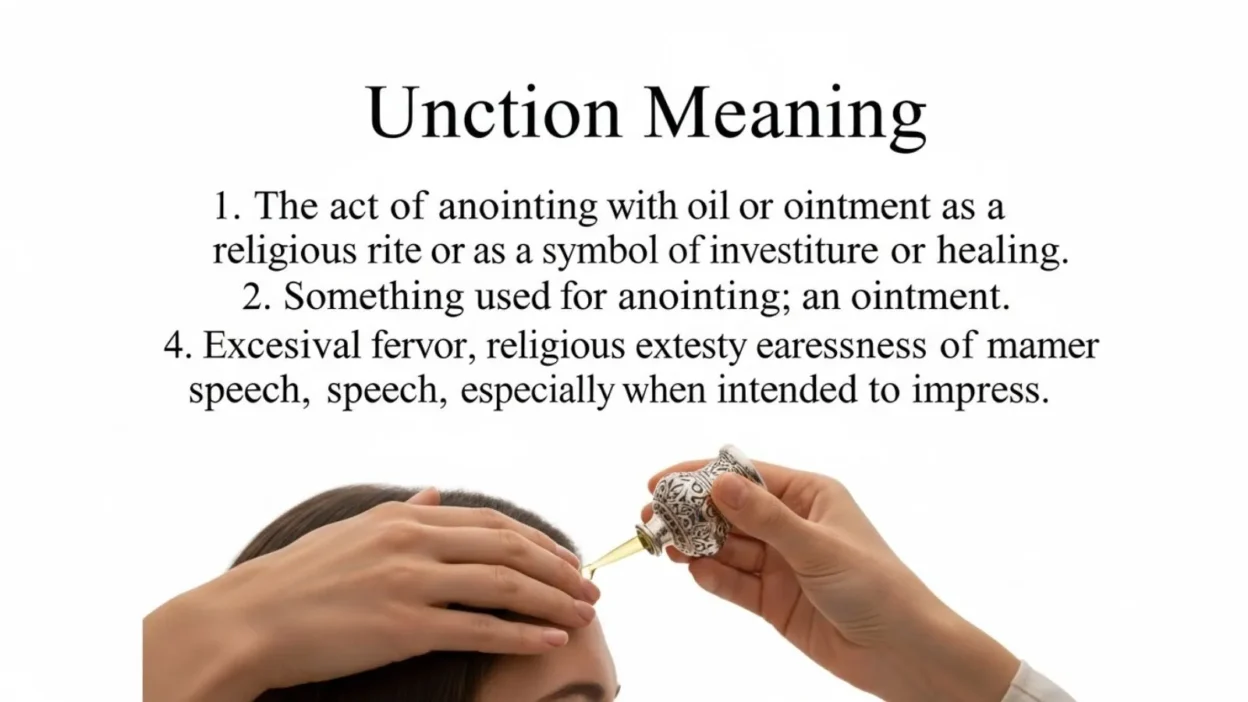
The term “unction” carries a profound and layered significance, especially in spiritual and religious contexts. At its core, unction refers to the act of anointing with oil, often symbolizing divine blessing, sanctification, or spiritual empowerment.
Beyond its literal meaning, unction also conveys a sense of divine inspiration or spiritual fervor, making it a term frequently used in Christian theology, biblical studies, and devotional literature.
Understanding the meaning of unction can open a window into how faith, tradition, and symbolism intersect, from the anointing of kings and prophets in the Bible to modern spiritual practices.
If you are exploring scripture, studying religious rituals, or simply curious about its deeper connotations, grasping the essence of unction helps illuminate its spiritual, historical, and literary importance.
In this article, we will break down the definition, significance, and practical applications of unction, giving you a complete guide to this timeless term.
What Is Unction? Definition and Overview
The word “unction” originates from the Latin term unctio, which literally means anointing. Traditionally, it refers to the act of applying oil, often in a religious or ceremonial context, symbolizing purification, consecration, or divine favor. In a broader sense, unction can also describe a spiritual or emotional intensity, a sense of heartfelt fervor that moves an individual to act or speak with conviction.
In religious practices, particularly in Christianity and Judaism, unction is closely associated with holy rituals, such as anointing kings, priests, or the sick. The oil represents God’s presence, blessing, and empowerment, making unction not just a physical act, but a spiritual one. For example, in the Bible, prophets and kings were often anointed to signify God’s approval and guidance.
Outside of strictly religious contexts, the term is also used figuratively in literature and speech. Writers may describe someone’s words or actions as having “unction” to suggest they are inspired, persuasive, or imbued with a special earnestness. This metaphorical use emphasizes sincerity, depth, and spiritual or emotional resonance.
Understanding what unction means requires looking at both its literal and symbolic dimensions. It is not only about oil or ritual but also about the invisible influence of spiritual or moral force. Recognizing unction in these contexts allows one to appreciate its historical significance, theological depth, and modern applications in everyday spiritual life.
Spiritual Significance of Unction
Unction holds a central place in spiritual life, especially within Christian theology, where it represents more than a physical act of anointing—it signifies divine empowerment and guidance. When a person experiences unction, it often reflects a sense of being filled with the Holy Spirit, receiving inspiration, or being moved to act in alignment with God’s will. This spiritual dimension of unction emphasizes connection, devotion, and transformation, highlighting the invisible yet profound impact of divine influence.
Historically, unction was seen as a mark of spiritual authority. Biblical figures such as kings, priests, and prophets were anointed with oil to signify their calling and to equip them for their divine responsibilities. The oil symbolized purity, protection, and empowerment, marking the individual as set apart for God’s purpose. Even today, many religious communities continue this tradition in ceremonies like ordination, healing services, and blessing rituals, maintaining unction as a symbol of God’s presence and favor.
Beyond formal rituals, unction is also experienced personally and internally. Many believers describe moments of profound clarity, conviction, or inspiration as being “under unction,” reflecting a deep spiritual connection that guides their thoughts, words, and actions. It can enhance prayer, worship, and ministry, fostering a sense of purpose and direction.
Ultimately, the spiritual significance of unction lies in its ability to bridge the human and the divine, offering both guidance and empowerment. By understanding unction, individuals gain insight into the ways spiritual life manifests in action, devotion, and divine inspiration.
Unction in the Bible Scriptural Insights
In the Bible, unction is a term deeply connected to anointing with oil, symbolizing God’s blessing, selection, and empowerment. From the Old Testament to the New Testament, unction is consistently portrayed as a divine act that sets individuals apart for a special purpose. Kings, priests, and prophets were often anointed to indicate God’s favor and authority. For instance, King David was anointed by the prophet Samuel, signaling his divine appointment and leadership over Israel. This physical act of unction carried a spiritual weight, marking the recipient as chosen and guided by God.
In the New Testament, unction takes on a spiritual and symbolic meaning beyond the physical act of anointing. Believers are described as receiving the Holy Spirit, which brings wisdom, guidance, and empowerment for living a godly life. The apostle John refers to believers having “an unction from the Holy One,” highlighting a personal, internal experience of divine inspiration. This shows that unction is not just ceremonial; it is also a living, spiritual reality that influences thoughts, actions, and faith.
Biblical unction emphasizes both authority and sanctification. It signifies God’s presence, equipping individuals to carry out their divine mission with wisdom and courage. Whether through literal anointing with oil or the metaphorical experience of the Holy Spirit, unction remains a powerful symbol of spiritual empowerment and divine guidance, illustrating how God communicates blessing, direction, and inspiration to His people across generations.
The Practice of Anointing Physical and Ritual Unction
The physical act of anointing with oil is one of the most tangible expressions of unction in religious practice. Historically, it has been used in Judaism, Christianity, and other faith traditions to signify purification, consecration, and divine blessing. Anointing often marks important milestones, such as the ordination of priests, the coronation of kings, the dedication of sacred spaces, or the healing of the sick. In each instance, the application of oil is more than symbolic—it represents a spiritual transfer of divine favor and empowerment.
In biblical times, anointing oil was carefully prepared with specific ingredients, often including olive oil and fragrant spices. The ritual would involve applying the oil to the head, hands, or other parts of the body while offering prayers, blessings, or declarations of God’s presence. This practice reinforced the belief that those anointed were set apart for God’s purpose, strengthened, and guided in their responsibilities.
Modern religious communities continue this tradition in various forms. Many Christian churches use anointing during healing services, baptisms, ordinations, or special blessings. The oil serves as a physical reminder of God’s presence, connecting believers with a centuries-old spiritual heritage.
Beyond its ceremonial aspect, the practice of anointing also carries a personal, devotional significance. Individuals may anoint themselves or others as an expression of faith, trust, and surrender to divine guidance. In this way, ritual unction bridges the physical and spiritual, reminding believers that spiritual empowerment often manifests through symbolic acts rooted in faith and tradition.
Unction in Literature and Figurative Use
While unction is most commonly associated with religious rituals, it also has a rich presence in literature and figurative language. Writers and speakers often use unction metaphorically to describe words, actions, or emotions that are inspired, heartfelt, or persuasive. In this sense, unction conveys a sense of depth, sincerity, and intensity, reflecting a figurative “anointing” that moves or influences others.
In classical literature, authors sometimes describe characters or speech as having unction to emphasize eloquence and moral authority. For example, a leader delivering a passionate speech might be said to speak “with unction,” suggesting that their words carry spiritual weight or inspire conviction. Similarly, poets may use the term to convey emotional resonance, portraying love, devotion, or divine inspiration with a heightened intensity.
This figurative use highlights the broader meaning of unction beyond physical or ceremonial acts. It emphasizes the idea of being imbued with a special quality or influence, whether spiritual, emotional, or moral. In modern writing, unction can describe any action or expression that feels deeply genuine or spiritually guided, connecting the ancient concept to contemporary life.
By understanding unction in both literal and figurative contexts, readers gain a more complete appreciation of the term. It shows that unction is not only about religious rituals but also about the inner power, authenticity, and inspiration that can shape human experience, communication, and creativity. This dual meaning enriches both spiritual study and literary interpretation.
Signs and Experiences of Spiritual Unction
Spiritual unction is not always visible like the ritual anointing with oil, but it is often experienced personally and profoundly. Many believers describe it as a sense of divine presence, guidance, or empowerment that inspires thought, speech, and action. It can manifest during prayer, worship, or moments of deep reflection, providing clarity, conviction, and a feeling of being spiritually strengthened.
Common signs of spiritual unction include a sudden sense of peace, heightened awareness of God’s will, or a compelling desire to serve or act righteously. Individuals may feel an emotional or spiritual stirring that encourages them to share wisdom, minister to others, or engage in acts of compassion. In some cases, unction can be so strong that it influences sermons, teaching, or personal guidance, giving words a power and authenticity that resonates with others.
Experiencing unction is often described as a personal encounter with the divine. Unlike formal ceremonies, it can occur spontaneously and uniquely for each person. Some believers recognize unction in moments of insight during scripture study, in prayerful inspiration, or when making significant life decisions aligned with their faith.
Understanding spiritual unction requires sensitivity and discernment. It is both a gift and a guide, enhancing spiritual growth and deepening one’s connection with God. By recognizing the signs of unction, individuals can better discern divine guidance, embrace spiritual empowerment, and apply it meaningfully in everyday life, cultivating a life of faith, purpose, and devotion.
Common Misconceptions About Unction
Despite its long history and spiritual significance, unction is often misunderstood in both religious and secular contexts. One common misconception is that unction is purely a ceremonial act, limited to the application of oil. While anointing is a central aspect of unction, the term also encompasses spiritual inspiration, divine empowerment, and heartfelt conviction, which are not always visible. Limiting unction to a physical ritual ignores its deeper theological and personal dimensions.
Another misunderstanding is equating unction with a general blessing or good luck. While unction does convey favor, it is more specific: it marks individuals for a divine purpose and equips them with spiritual guidance and authority. Unlike ordinary blessings, unction implies preparation, empowerment, and the presence of the Holy Spirit, making it both a spiritual gift and a calling.
Some also confuse unction with emotional enthusiasm or zeal. While spiritual unction can inspire emotion, it is distinct from mere excitement or motivation. True unction involves discernment, authenticity, and alignment with divine will, rather than temporary fervor.
Finally, cultural and denominational differences can create misunderstandings about how unction is practiced or interpreted. For example, the use of anointing oil may vary across Christian traditions, but the underlying spiritual principle remains the same: a connection to God, guidance, and empowerment.
By clarifying these misconceptions, readers can gain a more accurate understanding of unction, appreciating both its ceremonial and spiritual aspects. Recognizing what unction truly represents allows individuals to approach it with respect, discernment, and reverence, unlocking its deeper meaning in faith and daily life.
Unction in Modern Times
In today’s world, the concept of unction continues to hold relevance, both in religious communities and in personal spiritual practice. While the traditional act of anointing with oil remains a cornerstone in many churches, modern believers often experience unction in more personal and internal ways. It can manifest as a sense of spiritual guidance, inspiration, or empowerment that helps individuals navigate life’s challenges with faith and clarity.
Contemporary Christian communities frequently incorporate unction in healing services, ordinations, and blessings, emphasizing its symbolic and spiritual significance. The oil may serve as a tangible reminder of God’s presence, but the focus is equally on the inner spiritual experience—the empowerment to act, speak, and serve with divine guidance. This dual understanding of unction bridges centuries-old traditions with modern spiritual needs.
Beyond formal rituals, unction today also influences personal devotion, meditation, and ministry. Many believers seek moments of unction in prayer, scripture reading, or acts of service, viewing it as a way to receive clarity, purpose, and encouragement from God. Additionally, unction has inspired contemporary Christian literature, sermons, and motivational teachings, where it symbolizes authenticity, sincerity, and divine influence in thought and action.
Modern unction demonstrates that this ancient concept is not merely historical or ceremonial; it remains a living, transformative force. By embracing both its traditional and contemporary expressions, believers can connect more deeply with God, experience spiritual empowerment, and apply unction meaningfully in everyday life.
How to Experience or Apply Unction Today
Experiencing or applying unction in modern life involves more than ritual; it is about cultivating a spiritual sensitivity and openness to divine guidance. One of the simplest ways to engage with unction is through prayer and meditation. By dedicating time to quiet reflection, believers can become more receptive to the promptings of the Holy Spirit, allowing spiritual insight and inspiration to guide thoughts, decisions, and actions.
Another avenue is through scripture study and worship. Many find that focused reading of sacred texts, combined with heartfelt worship, invites unction into daily life. This can manifest as clarity, conviction, or a heightened sense of purpose, helping individuals align their choices with spiritual principles.
Acts of service and compassion also provide opportunities to apply unction. When people act with genuine care, guided by moral or spiritual discernment, their actions reflect the influence of divine inspiration. Even small gestures of kindness, leadership, or teaching can carry the essence of unction, extending its impact beyond personal experience to the wider community.
For those seeking physical expressions, anointing with oil remains a meaningful practice in many religious traditions. However, it is most powerful when paired with faith, intentionality, and devotion, reminding the believer that unction is both an internal and external experience.
Ultimately, applying unction today is about integrating spiritual awareness into everyday life, recognizing moments of divine guidance, and responding with sincerity and purpose. It transforms ordinary actions into expressions of faith, making unction a living, practical force for spiritual growth.
Frequently Asked Questions About Unction
1. What does unction mean?
Unction primarily refers to the act of anointing with oil, symbolizing divine blessing, sanctification, or empowerment. Spiritually, it also represents inspiration, fervor, or guidance from God, influencing thoughts, actions, and speech.
2. Where is unction mentioned in the Bible?
Unction appears throughout both the Old and New Testaments. In the Old Testament, kings, priests, and prophets were anointed with oil to signify God’s favor and authority. In the New Testament, believers are described as receiving unction from the Holy Spirit, reflecting spiritual guidance and empowerment.
3. Is unction only a religious practice?
No. While unction is central to religious rituals, it also has figurative uses in literature and speech, describing actions or words that are heartfelt, inspired, or persuasive. This shows its symbolic and spiritual significance beyond physical ceremonies.
4. How can I experience unction today?
Modern experiences of unction often involve prayer, meditation, worship, acts of service, or scripture study. Physical anointing with oil can be part of religious practice, but the key is spiritual openness, faith, and responsiveness to divine guidance.
5. What are common misconceptions about unction?
Many people think unction is only ceremonial, a blessing, or emotional zeal. True unction involves divine empowerment, spiritual guidance, and purpose, not merely ritual or temporary enthusiasm.
Conclusion
Unction is a term that bridges the physical, spiritual, and metaphorical realms, offering profound insight into faith, inspiration, and divine guidance.
From its literal meaning of anointing with oil to its figurative use in literature and speech, unction carries a sense of purpose, empowerment, and sincerity.
Biblically, it represents God’s favor, marking individuals for special roles, while spiritually, it provides inspiration and direction in daily life.
Modern practices of unction through prayer, worship, acts of service, and ritual anointing demonstrate its continued relevance, connecting believers with a tradition that spans centuries.
By understanding unction, recognizing its signs, and applying it thoughtfully, individuals can deepen their spiritual connection, embrace divine guidance, and bring intentionality to their actions.
Ultimately, unction is more than a ritual; it is a living force that nurtures faith, inspires purpose, and enriches both personal and communal spiritual life.