
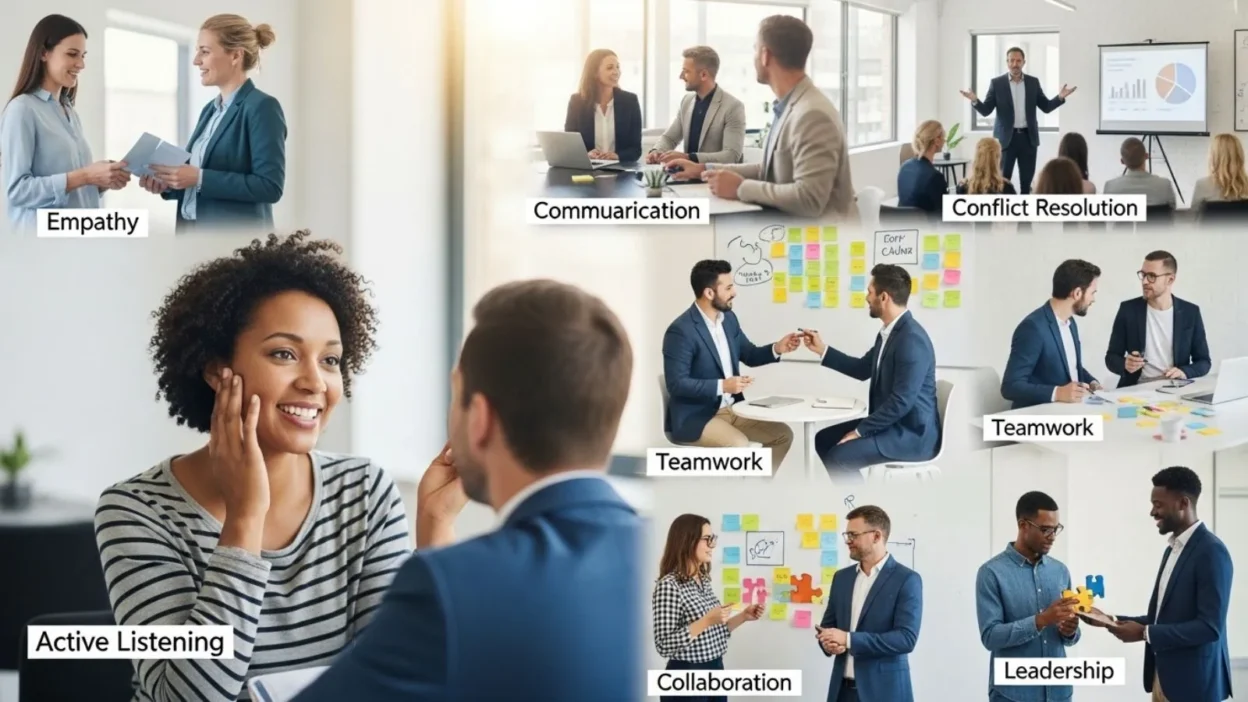
Soft skills are the personal attributes and social abilities that allow individuals to interact effectively and harmoniously with others.
Unlike hard skills, which focus on technical knowledge and job-specific expertise, soft skills emphasize communication, teamwork, problem-solving, and emotional intelligence.
In today’s professional world, employers increasingly value soft skills because they directly impact collaboration, workplace culture, and career growth.
If you are managing a team, negotiating with clients, or simply navigating day-to-day interactions, strong soft skills can make a significant difference in your personal and professional success.
Understanding the true meaning of soft skills helps individuals recognize their importance, identify areas for improvement, and develop habits that enhance their overall effectiveness.
In this article, we will explore the meaning of soft skills, why they matter, and practical ways to develop them, providing actionable insights to boost both employability and interpersonal relationships.
Definition of Soft Skills
Soft skills are a combination of personal traits, social abilities, and communication skills that enable individuals to interact effectively with others and navigate various social and professional situations. Unlike hard skills, which are technical and measurable—like coding, accounting, or graphic design—soft skills are intangible and often relate to how we approach work, collaborate with colleagues, and solve problems. Common soft skills include communication, teamwork, leadership, adaptability, emotional intelligence, and problem-solving.
Understanding the meaning of soft skills is essential because they are transferable across different jobs, industries, and life situations. For instance, strong communication skills are just as valuable in a corporate office as they are in customer service or education. Similarly, teamwork and collaboration skills are critical whether you’re working on a small project or leading a large team.
Soft skills also influence how others perceive you professionally. They can enhance your reputation, build trust, and improve relationships with colleagues, clients, and managers. Unlike hard skills, which can often be taught in classrooms or online courses, soft skills are typically developed through practice, feedback, and self-awareness.
In short, soft skills are the personal qualities that complement technical expertise, enabling individuals to succeed not just at tasks but in interacting and thriving in professional and social environments. Recognizing their value is the first step toward personal and career growth.
Importance of Soft Skills
Soft skills are increasingly recognized as essential for personal and professional success. While hard skills help you complete tasks, soft skills determine how effectively you collaborate, communicate, and adapt in real-world situations. In fact, many employers consider soft skills just as important, if not more, than technical expertise when evaluating candidates.
One major reason soft skills are important is their impact on career growth. Employees who communicate clearly, work well in teams, and demonstrate leadership qualities are often trusted with greater responsibilities, promotions, and management roles. For example, strong problem-solving skills can help you navigate unexpected challenges, while adaptability allows you to adjust quickly to changing work environments.
Soft skills also influence workplace relationships and productivity. Team members who demonstrate empathy, active listening, and effective communication create a positive environment that fosters collaboration and reduces conflicts. Emotional intelligence, a core soft skill, helps individuals understand and manage their own emotions while responding effectively to others, improving both professional and personal interactions.
Beyond the workplace, soft skills matter in daily life. They enhance interpersonal relationships, improve decision-making, and boost confidence. Whether you are negotiating with a client, resolving a conflict, or networking at an event, soft skills can make the difference between success and missed opportunities.
Top Examples of Soft Skills
Soft skills cover a wide range of personal and interpersonal abilities that help individuals succeed in professional and social environments. Here are some of the most important examples:
1. Communication Skills:
Effective communication is essential in every setting. It includes verbal, non-verbal, and written communication, as well as active listening. Employees who express ideas clearly and listen attentively can prevent misunderstandings and build strong relationships.
2. Teamwork and Collaboration:
Working well with others is a crucial soft skill. Team players cooperate, support colleagues, and contribute positively to group goals. Collaboration fosters creativity, efficiency, and a sense of unity in the workplace.
3. Problem-Solving and Critical Thinking:
These skills allow individuals to analyze situations, identify challenges, and develop effective solutions. Critical thinkers approach problems logically, while creative problem-solvers explore innovative ways to overcome obstacles.
4. Adaptability and Flexibility:
In today’s fast-changing work environments, being adaptable is invaluable. Employees who embrace change, learn new skills quickly, and adjust to shifting priorities are more likely to thrive.
5. Leadership and Time Management:
Leadership isn’t limited to managers—it involves taking initiative, motivating others, and guiding projects toward success. Time management helps prioritize tasks, meet deadlines, and maintain productivity.
6. Emotional Intelligence (EQ):
EQ is the ability to understand your own emotions and empathize with others. Individuals with high emotional intelligence build stronger relationships, manage conflicts effectively, and create positive work environments.
Soft Skills vs Hard Skills
Understanding the difference between soft skills and hard skills is essential for professional development. Hard skills are technical abilities that are specific to a job, such as programming, data analysis, accounting, or graphic design. These skills are often measurable and can be taught through formal education, training, or certifications. They enable employees to perform the technical aspects of their roles efficiently.
Soft skills, on the other hand, are personal attributes and interpersonal abilities that influence how effectively a person interacts with others and navigates professional environments. Examples include communication, teamwork, adaptability, leadership, emotional intelligence, and problem-solving. Unlike hard skills, soft skills are more subjective and are typically developed through experience, practice, and self-awareness rather than formal classes.
While hard skills may get you an interview, soft skills often determine whether you succeed in the role and advance in your career. For instance, a software developer may have excellent coding abilities (hard skills), but without communication and teamwork skills (soft skills), collaborating on projects or explaining technical concepts to clients can become challenging.
In today’s dynamic workplaces, both skill sets complement each other. Employers value candidates who not only have technical expertise but can also work well in teams, adapt to changes, and manage conflicts effectively. Combining hard and soft skills creates a well-rounded professional capable of handling tasks and thriving in a collaborative, real-world environment.
How to Develop Soft Skills
Developing soft skills requires conscious effort, practice, and self-awareness. Unlike hard skills, which can often be learned through structured courses, soft skills grow over time through experience and intentional improvement. Here are some practical ways to develop them:
1. Self-Assessment and Reflection:
Start by identifying your strengths and areas for improvement. Reflect on past experiences to understand situations where your soft skills were effective or needed enhancement. Keeping a journal can help track progress.
2. Seek Feedback:
Ask colleagues, mentors, or supervisors for constructive feedback. Understanding how others perceive your communication, teamwork, or leadership skills can provide valuable insights for improvement.
3. Practice Communication and Interpersonal Skills:
Engage in active listening, clear expression of ideas, and respectful dialogue. Join discussion groups, participate in team projects, or practice presentations to enhance confidence and clarity.
4. Learn Through Workshops and Courses:
Attend soft skills training programs, webinars, or online courses. Topics like emotional intelligence, leadership, and conflict resolution provide structured ways to improve.
5. Embrace Challenges and Adaptability:
Step out of your comfort zone by taking on new responsibilities, leading projects, or handling difficult situations. Real-world experience strengthens adaptability, problem-solving, and resilience.
6. Continuous Learning:
Soft skills are lifelong skills. Consistently practicing patience, empathy, collaboration, and time management will gradually make these abilities natural.
Soft Skills in Job Interviews and Career
Soft skills play a crucial role in job interviews and long-term career growth. While your technical expertise demonstrates your ability to perform tasks, employers often prioritize soft skills to gauge how well you will fit into the workplace culture and interact with colleagues.
During interviews, candidates can showcase soft skills in several ways. Communication skills are essential—answering questions clearly, confidently, and concisely demonstrates your ability to convey ideas effectively. Teamwork and collaboration can be highlighted by sharing examples of projects where you successfully worked with others to achieve goals. Employers also look for problem-solving abilities, so providing instances where you identified challenges and implemented solutions shows critical thinking and initiative.
Emotional intelligence is another key factor. Being self-aware, showing empathy, and managing emotions under pressure indicate your ability to handle workplace dynamics smoothly. Adaptability can be illustrated by describing situations where you successfully adjusted to new tasks, tools, or processes.
Soft skills don’t just help you land a job—they influence career advancement. Employees who can lead teams, communicate effectively, resolve conflicts, and inspire others are more likely to earn promotions and take on leadership roles. Demonstrating these abilities consistently at work builds trust, strengthens professional relationships, and enhances overall productivity.
In today’s competitive job market, combining technical knowledge with strong soft skills gives you a clear advantage, making you not only a capable worker but also a valuable team member and leader.
Soft Skills in Education and Personal Life
Soft skills are not only vital in the workplace but also play a significant role in education and personal life. Students, for example, benefit greatly from skills like communication, teamwork, and time management. These abilities enhance learning experiences, improve classroom participation, and help in collaborating on group projects. Schools and colleges increasingly emphasize soft skills because they prepare students for real-world challenges beyond academics.
In personal life, soft skills strengthen relationships and improve interactions with family, friends, and community members. Communication skills allow individuals to express thoughts clearly, resolve misunderstandings, and build trust. Emotional intelligence helps in understanding others’ feelings, showing empathy, and responding appropriately in social situations.
Problem-solving and adaptability are valuable in both personal and educational settings. Handling conflicts, adjusting to new environments, or managing unexpected changes become easier when these skills are practiced. Leadership and teamwork also appear in extracurricular activities, volunteer work, or household responsibilities, teaching responsibility and collaboration from an early age.
Moreover, developing soft skills in personal life creates a foundation for lifelong learning and continuous self-improvement. By practicing patience, active listening, and interpersonal skills, individuals become more confident, socially aware, and capable of handling challenges effectively.
Ultimately, investing in soft skills during education and daily life ensures that individuals not only excel academically or professionally but also lead fulfilling, balanced, and harmonious personal lives.
Future of Soft Skills
As technology continues to evolve, the importance of soft skills in the workplace is only increasing. While automation, artificial intelligence, and advanced tools handle technical tasks, human-centered abilities like communication, creativity, and emotional intelligence remain irreplaceable. Employers are now prioritizing soft skills more than ever because they directly influence collaboration, problem-solving, and innovation.
In the future, skills such as adaptability, resilience, and critical thinking will be crucial. With workplaces becoming more dynamic and project-based, employees must navigate constant changes, embrace new technologies, and work with diverse teams across cultures and locations. Soft skills like empathy and cross-cultural communication will help individuals succeed in globalized environments.
Leadership and teamwork will continue to play a vital role, as organizations need people who can inspire others, manage conflicts, and foster a positive work culture. Additionally, creativity and innovation will be highly valued, enabling employees to develop unique solutions and drive business growth.
Even in education and personal life, soft skills will remain critical. Lifelong learning, interpersonal awareness, and problem-solving abilities will help individuals adapt to changing demands and maintain strong personal and professional relationships.
In short, while technical knowledge is essential, soft skills are the differentiating factor that ensures long-term success. Investing in soft skills today prepares individuals for a future where human interaction, adaptability, and emotional intelligence are more important than ever.
FAQs About Soft Skills
1. What are soft skills?
Soft skills are personal attributes and interpersonal abilities that help individuals interact effectively with others. They include communication, teamwork, problem-solving, adaptability, leadership, and emotional intelligence. Unlike hard skills, they are less technical and more about behavior, attitude, and approach.
2. Why are soft skills important?
Soft skills are crucial for career success and personal development. They improve communication, teamwork, conflict resolution, and leadership abilities. Employers value soft skills because they directly impact productivity, workplace culture, and client relationships.
3. Can soft skills be learned?
Yes, soft skills can be developed through practice, self-awareness, feedback, and training. Engaging in teamwork, attending workshops, seeking mentorship, and reflecting on personal interactions are effective ways to strengthen soft skills.
4. What are examples of soft skills?
Common examples include communication, teamwork, problem-solving, adaptability, time management, leadership, creativity, and emotional intelligence. These skills enhance both professional and personal interactions.
5. How are soft skills assessed in job interviews?
Employers assess soft skills by asking behavioral questions, observing communication style, evaluating teamwork experiences, and reviewing examples of problem-solving or leadership from past roles. Demonstrating these skills through real-life examples is key.
6. How do soft skills differ from hard skills?
Hard skills are technical and job-specific, such as coding, accounting, or graphic design. Soft skills focus on personal attributes and interpersonal abilities, such as communication, empathy, and collaboration. Both are necessary for career success.
Conclusion
Soft skills are essential personal attributes that complement technical knowledge and play a critical role in both professional and personal success. They include communication, teamwork, adaptability, problem-solving, leadership, and emotional intelligence.
Unlike hard skills, which can be taught in classrooms, soft skills are developed through practice, self-awareness, and real-world experiences.
Understanding the meaning and importance of soft skills allows individuals to identify areas for improvement and take actionable steps toward growth.
If it’s navigating workplace challenges, building strong relationships, or advancing in a career, soft skills enhance effectiveness, collaboration, and overall impact.