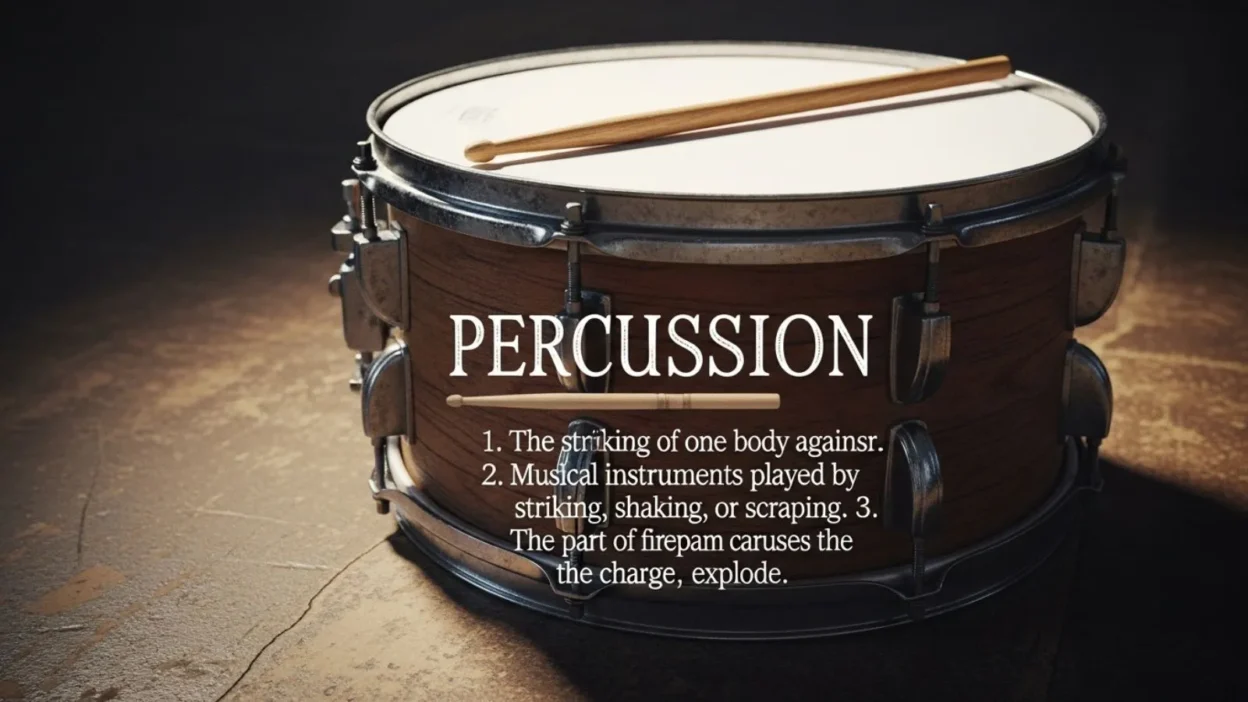
Percussion is one of the most exciting and dynamic elements in the world of music. But what does percussion really mean? At its core, percussion refers to instruments that produce sound when struck, shaken, or scraped.
This includes everything from drums, cymbals, and xylophones to unconventional objects like shakers or even your own hands. Percussion instruments form the heartbeat of music, providing rhythm, energy, and depth to songs across all genres.
Understanding the meaning of percussion not only helps musicians improve their timing and technique but also gives listeners a deeper appreciation for the layers of sound in a composition.
If you are a student, a beginner percussionist, or simply a music enthusiast, exploring the world of percussion reveals how rhythm shapes music and culture. From orchestras to modern bands, percussion plays a crucial role in creating the music we love.
What Does Percussion Mean in Music?
When we talk about percussion in music, we are referring to a family of instruments that create sound primarily through striking, shaking, or scraping. The word “percussion” itself comes from the Latin percussio, meaning “a striking or beating,” which perfectly describes how these instruments produce sound. Unlike strings or wind instruments, percussion instruments do not rely on vibration of strings or airflow—they rely on rhythm and impact.
Percussion instruments can be classified into two main categories: membranophones, which produce sound through vibrating membranes (like drums), and idiophones, which produce sound through the vibration of their solid material (like cymbals or xylophones). There are also auxiliary percussion instruments, such as tambourines or shakers, which add unique textures and rhythms to music.
The role of percussion goes beyond simply keeping time. Percussion adds dynamics, mood, and intensity to a musical composition. From the steady beat of a drum in a rock song to the intricate rhythms of a classical orchestra, percussion shapes the energy and emotion of the music.
Understanding the meaning of percussion also helps beginners and enthusiasts appreciate the skill and creativity behind rhythm. Whether you are learning to play the drums, exploring world percussion, or listening to an orchestra, recognizing how percussion instruments work gives insight into the heartbeat of music itself.
History of Percussion Instruments
Percussion instruments are among the oldest musical tools in human history. Long before modern orchestras or drum kits existed, early humans used sticks, stones, and animal skins to create rhythm and communicate through sound. In many ancient civilizations, percussion played a central role in rituals, ceremonies, and storytelling.
As civilizations developed, so did percussion instruments. In Asia, instruments like the Chinese gong and Japanese taiko drums became vital for cultural performances. In Europe, the evolution of orchestral percussion began around the Baroque period, with timpani, snare drums, and cymbals gradually becoming standard in classical compositions.
During the 19th and 20th centuries, percussion expanded further with the rise of jazz, rock, and world music. Drummers experimented with drum kits, auxiliary instruments, and unconventional objects to create new sounds. Electronic percussion, including drum machines and digital pads, later revolutionized modern music production, adding layers of rhythm that were once impossible to produce manually.
Understanding the history of percussion instruments helps us appreciate how rhythm has shaped music across cultures and eras. From ancient rituals to contemporary songs, percussion continues to be a universal language of energy, emotion, and creativity.
Types of Percussion Instruments
Percussion instruments are incredibly diverse, and understanding their types is key to grasping the full meaning of percussion. Broadly, percussion instruments fall into three main categories: idiophones, membranophones, and auxiliary percussion.
Idiophones are instruments that produce sound from the material itself vibrating. Common examples include xylophones, marimbas, cymbals, and bells. When struck, these solid instruments create tones without needing strings or membranes. Idiophones are often used to add melody and bright accents in orchestras, bands, and modern music.
Membranophones rely on a stretched membrane to create sound. This category includes most traditional drums, such as snare drums, bass drums, bongos, and congas. Striking the drumhead causes the membrane to vibrate, producing rhythmic patterns that form the backbone of most musical compositions. Membranophones are essential in both classical and popular music for maintaining rhythm and driving energy.
Auxiliary percussion refers to instruments that don’t fit neatly into the first two categories but enhance texture and rhythm. Examples include tambourines, shakers, triangles, cowbells, and even unconventional items like buckets or bottles. These instruments add unique sounds, fills, and accents that make music more dynamic.
Modern music also features electronic percussion, including drum machines and digital pads, which allow musicians to produce sounds that traditional instruments cannot.
By understanding these types of percussion instruments, beginners and enthusiasts alike can appreciate the versatility and creativity involved in percussion. Each category brings a distinct voice to music, contributing to rhythm, melody, and emotional impact.
How Percussion Produces Sound
Percussion instruments are unique because they produce sound through direct physical action, rather than strings or airflow. The way a percussion instrument produces sound depends on its type, material, and the technique used to play it.
For membranophones, such as drums, sound is created when a player strikes a stretched membrane, called the drumhead. The impact causes the membrane to vibrate, producing rhythmic pulses. The tension of the drumhead, the material of the drum shell, and the force of the strike all influence the pitch, tone, and volume. For example, a tightly stretched snare drum produces a sharp, crisp sound, while a bass drum delivers a deep, resonant thump.
Idiophones, like cymbals, xylophones, and bells, generate sound when the body of the instrument itself vibrates. Striking, shaking, or scraping these solid objects causes vibrations that produce tone and resonance. The material—metal, wood, or stone—determines the brightness, warmth, or sharpness of the sound.
Auxiliary percussion instruments, such as tambourines, shakers, or triangles, rely on small, repeated impacts to create rhythm and texture. Even unconventional objects like glass bottles or buckets can serve as percussion when they vibrate upon impact.
Modern electronic percussion instruments mimic these physical principles digitally. Drum pads and machines produce sounds by triggering recorded samples or synthesized tones, allowing infinite variations in rhythm and timbre.
Understanding how percussion produces sound helps musicians control dynamics, rhythm, and emotion in music. It reveals the science behind what might seem like simple striking or shaking, showing how percussion truly drives the heartbeat of every song.
Percussion in Different Music Genres
Percussion is a vital component in nearly every music genre, shaping rhythm, energy, and emotion. In classical music, percussion instruments like timpani, snare drums, cymbals, and xylophones add dramatic effects, emphasize climaxes, and complement melodies. Orchestras often rely on the percussion section to enhance dynamics and create tension, demonstrating the foundational role of rhythm in classical compositions.
In jazz, percussion is equally essential but more improvisational. Drum sets, congas, bongos, and brushes allow musicians to experiment with syncopation, swing, and complex rhythms. Percussion in jazz provides both a steady beat and a platform for creative expression, enabling musicians to interact spontaneously with other instruments.
Rock and pop music rely heavily on the drum kit, which includes bass drums, snare drums, cymbals, and toms. Percussion drives the tempo and adds energy, making songs catchy and danceable. Additional percussion elements like tambourines, shakers, and electronic pads give modern pop songs extra texture and rhythm.
In world music, percussion reflects cultural identity. African djembe drums, Indian tabla, Latin congas, and Japanese taiko each bring unique rhythms and tones that define their musical traditions. Percussion in these genres often combines complex patterns with storytelling, ritual, or dance.
Even in electronic music, digital percussion and drum machines play a critical role, producing beats that would be difficult to replicate acoustically.
Across all genres, percussion shapes the pulse, mood, and intensity of music, proving that understanding percussion is essential for both musicians and listeners alike.
The Percussion Section in an Orchestra or Band
The percussion section is a vital part of both orchestras and bands, providing rhythm, texture, and dramatic effects. In an orchestra, percussionists often play a wide variety of instruments, including timpani, snare drums, bass drums, cymbals, tambourines, xylophones, and marimbas. These instruments are used not only to maintain rhythm but also to accentuate important musical moments, build tension, and enhance the overall dynamics of a piece.
In a concert band, percussion typically includes both melodic and non-melodic instruments. Drums, cymbals, and auxiliary percussion maintain the beat, while instruments like the glockenspiel or xylophone contribute melodic lines. Percussionists must be versatile, often switching between multiple instruments within a single composition.
In marching bands, percussion takes on an even more prominent role. The drumline—including snare drums, bass drums, and tenor drums—drives the tempo and keeps the ensemble synchronized during performances and parades. Marching percussion is also highly visual, with precise movements enhancing the performance.
Modern rock, pop, and jazz bands have their own percussion sections, usually centered around the drum kit, with additional instruments like tambourines, shakers, and electronic pads adding color and depth. Percussionists in these settings often serve as the backbone of rhythm, helping other musicians stay in time and creating dynamic energy that connects with audiences.
Understanding the role of the percussion section helps music enthusiasts appreciate the coordination, skill, and creativity involved. Percussion is not just about keeping time—it shapes the music’s emotion, texture, and impact.
Learning Percussion: Tips for Beginners
Learning percussion can be both fun and rewarding, whether you aim to play in a band, orchestra, or just explore rhythm as a hobby. For beginners, it’s important to start with a few essential percussion instruments such as a snare drum, practice pad, tambourine, or simple hand percussion instruments like shakers or bongos. These provide a solid foundation for developing rhythm and coordination.
One of the most important skills in percussion is mastering timing and rhythm. Beginners should practice with a metronome, starting slowly to ensure accuracy before gradually increasing speed. Learning basic rhythms and beats helps develop muscle memory and confidence.
Hand technique is also essential. Proper grip, striking method, and hand positioning affect tone and control. For drum kits, beginners should focus on coordinating hands and feet, practicing simple patterns before attempting complex beats. For melodic percussion like xylophones or marimbas, focus on precision and consistent striking to produce clear tones.
In addition to practice, listening is a valuable tool. Observing professional percussionists, watching tutorials, and attending live performances can inspire and teach new techniques. Online resources, including video lessons and virtual drum kits, make learning accessible from home.
Most importantly, beginners should be patient and enjoy the process. Percussion is about rhythm, creativity, and expression. With regular practice, exploration, and persistence, anyone can develop the skills to play percussion confidently and add vibrant energy to any musical performance.
Famous Percussionists and Their Impact
Throughout history, percussionists have played a crucial role in shaping music across genres. Their creativity, skill, and innovation have influenced rhythm, style, and musical expression worldwide.
In the world of jazz, Buddy Rich is considered one of the greatest drummers of all time. Known for his incredible speed, precision, and dynamic solos, he set a new standard for drumming excellence. Tito Puente, often called the “King of Latin Music,” brought Afro-Cuban percussion, including timbales and congas, to international audiences, influencing Latin jazz and popular music.
In rock and pop, percussionists like John Bonham of Led Zeppelin revolutionized the drum kit, combining power and creativity to drive rock rhythms. Modern drummers, such as Travis Barker of Blink-182, have continued to innovate with fast-paced, intricate beats, blending traditional percussion with electronic elements.
Classical music has its icons too. Evelyn Glennie, a Scottish percussionist, is renowned for her virtuosity and for performing entirely by touch despite being profoundly deaf. She has elevated percussion to a solo concert instrument, inspiring musicians worldwide.
These percussionists not only mastered their instruments but also transformed how rhythm is perceived and appreciated. By blending technique, creativity, and emotion, they demonstrated that percussion is far more than background support—it is a central voice in music.
Understanding the contributions of these legendary percussionists helps students and enthusiasts appreciate the meaning of percussion and its impact on music history and culture.
Fun Facts About Percussion
Percussion is not only essential in music but also full of surprises and interesting facts. Did you know that some of the earliest percussion instruments date back over 6,000 years? Ancient civilizations used drums, rattles, and clappers for communication, ceremonies, and storytelling long before modern instruments were invented.
Percussion comes in many unusual forms. In addition to traditional drums, xylophones, and cymbals, musicians have used buckets, pots, bottles, and even everyday objects as percussion instruments. This creative approach shows that rhythm can be found everywhere, not just in standard instruments.
Body percussion is another fascinating aspect. Clapping, stomping, snapping fingers, and chest slapping have been used in African, Indian, and Latin music traditions to create intricate rhythms without any instruments at all. These rhythms often accompany dance, storytelling, or rituals, proving percussion’s cultural versatility.
Did you know that percussion can even affect your brain? Studies show that playing or listening to rhythmic percussion patterns can improve coordination, concentration, and even mood. Percussion is also used in music therapy, helping people with stress relief, emotional expression, and motor skills development.
Finally, percussion has an exciting global presence. African djembes, Japanese taiko drums, Indian tablas, and Latin congas each create unique sounds and complex rhythms, highlighting the diversity of world music.
These fun facts reveal that percussion is far more than just a beat—it’s a universal, creative, and scientific part of human culture that continues to inspire musicians and audiences alike.
Percussion FAQ: Common Questions Answered
1. What is percussion in music?
Percussion refers to instruments that produce sound when struck, shaken, or scraped. This includes drums, cymbals, xylophones, tambourines, and even unconventional objects like shakers or buckets. Percussion forms the rhythmic backbone of nearly all music genres.
2. What are the main types of percussion instruments?
There are three main types:
- Idiophones: Instruments that vibrate themselves, like cymbals, bells, or xylophones.
- Membranophones: Instruments with a stretched membrane, such as snare drums or bass drums.
- Auxiliary percussion: Instruments that add texture and accents, including tambourines, shakers, and triangles.
3. How does percussion produce sound?
Percussion produces sound through physical action. Membranophones vibrate membranes when struck, idiophones vibrate their solid bodies, and auxiliary instruments add rhythmic or melodic textures. Electronic percussion triggers sounds digitally.
4. Why is percussion important in music?
Percussion provides rhythm, tempo, and energy. It shapes the mood, dynamics, and intensity of a composition. Without percussion, music would lack structure and drive.
5. Can beginners learn percussion easily?
Yes! Starting with simple instruments like a practice pad, snare drum, or hand percussion is ideal. Consistent practice, using a metronome, and learning basic rhythms help beginners develop timing and coordination.
6. What are some famous percussion instruments in world music?
Examples include African djembes, Indian tablas, Latin congas, and Japanese taiko drums. Each brings unique sounds and rhythms reflecting cultural traditions.
Conclusion
Percussion is much more than just drums it is the heartbeat of music, shaping rhythm, dynamics, and emotion across every genre.
From ancient drums and rattles to modern drum kits and electronic percussion, percussion instruments have evolved, yet their core purpose remains the same: to create rhythm and bring music to life.
Understanding the meaning of percussion helps musicians, students, and music lovers appreciate the skill, creativity, and cultural significance behind every beat.
Whether you are exploring percussion instruments for the first time, learning to play, or simply enjoying music, recognizing the role of percussion adds depth to your experience.
Its presence in classical, jazz, rock, pop, and world music highlights its versatility and universal appeal. By exploring percussion, you can connect more deeply with music, understand its rhythm, and perhaps even discover your own passion for playing and creating rhythm.