
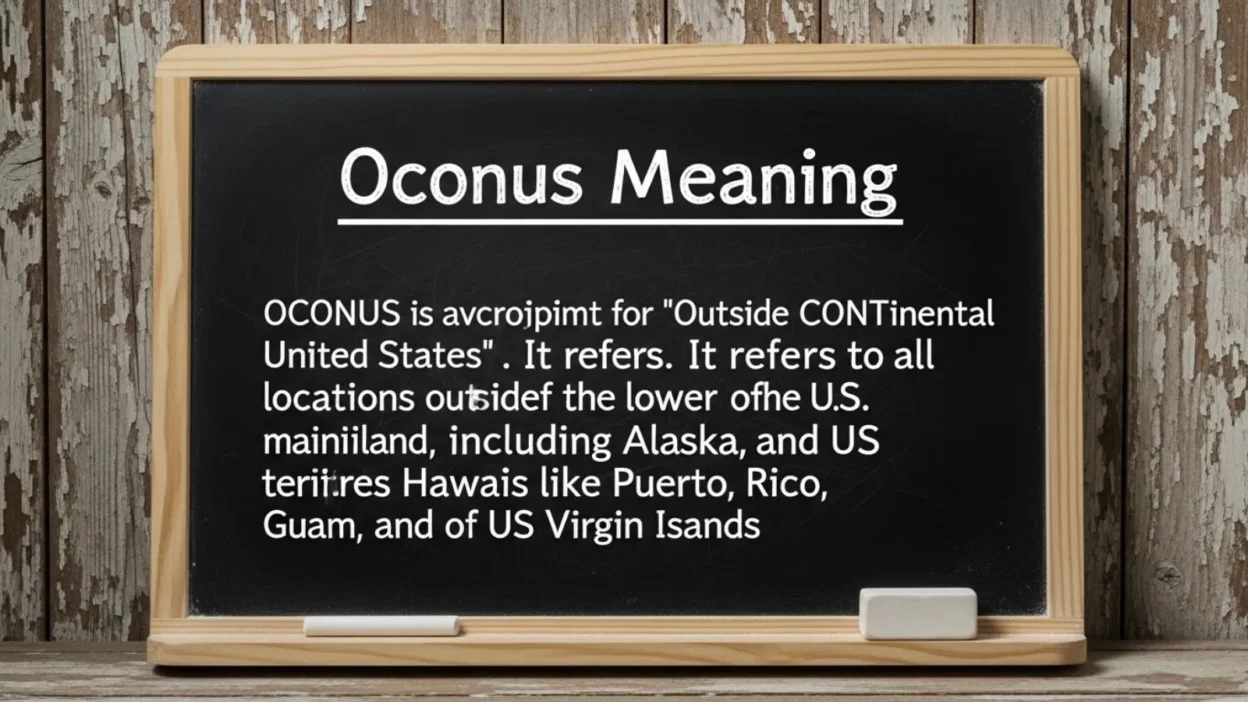
Understanding military or government jargon can be tricky, especially when you come across terms like OCONUS. If you’ve ever read official documents, assignment orders, or job postings and wondered, “What does OCONUS mean?”, you’re not alone.
Simply put, OCONUS stands for “Outside the Continental United States”, and it’s a term widely used in the military, federal government, and international operations. While it may sound technical, knowing what OCONUS means is essential for anyone dealing with overseas assignments, deployments, or federal travel policies.
Unlike CONUS, which refers to the contiguous 48 states, OCONUS applies to locations beyond that, including Alaska, Hawaii, and overseas territories.
In this article, we’ll break down the meaning of OCONUS, explore its importance, clarify common confusions, and explain how it impacts travel, pay, and benefits. By the end, you’ll have a clear understanding of this key term and why it matters in real-world assignments.
What Does OCONUS Mean?
The term OCONUS is an acronym for “Outside the Continental United States”. It is widely used in the military, federal government, and related fields to classify locations, assignments, or operations that fall beyond the contiguous 48 states of the U.S. Understanding OCONUS is important because it affects travel, pay, and benefits for personnel working in these areas.
When we talk about the Continental United States (CONUS), we refer to the 48 adjoining states excluding Alaska and Hawaii. Therefore, OCONUS locations include Alaska, Hawaii, U.S. territories, and international assignments outside the continental U.S. For example, a military base in Germany or a federal government office in Guam would be considered OCONUS.
OCONUS is not just a geographical classification—it has practical implications. For military personnel, OCONUS assignments often come with additional pay, such as hazard or cost-of-living allowances. Government employees working in OCONUS locations may receive relocation benefits or special travel reimbursements. Even contractors and civilian workers might encounter the term when applying for overseas jobs or international projects.
In short, whenever you see OCONUS in an official context, it simply means that the location or assignment is beyond the continental U.S. Recognizing this distinction helps individuals plan for travel, logistics, and benefits, ensuring they understand the rules and entitlements associated with overseas or non-continental postings.
OCONUS vs CONUS: Understanding the Difference
Understanding OCONUS becomes even easier when you compare it to its counterpart, CONUS. CONUS stands for “Continental United States”, which refers to the 48 contiguous states excluding Alaska and Hawaii. Simply put, CONUS locations are within the main part of the U.S., while OCONUS locations are outside that area, including Alaska, Hawaii, U.S. territories, and international assignments.
This distinction is more than just geography—it has real-world implications, especially for military personnel, government employees, and contractors. For example, an employee assigned to CONUS might not receive extra housing or hazard allowances, while someone assigned OCONUS could be eligible for special pay, relocation benefits, or cost-of-living adjustments. Similarly, travel rules differ: OCONUS assignments often involve longer travel, additional documentation, and sometimes visa requirements depending on the country.
A simple way to visualize this is through a table comparison:
| Feature | CONUS | OCONUS |
|---|---|---|
| Location | 48 contiguous states | Alaska, Hawaii, overseas, territories |
| Allowances | Standard | Additional (hazard, relocation, COLA) |
| Travel requirements | Regular | Often extensive, may need approvals |
| Deployment examples | Domestic assignments | Overseas bases, foreign missions |
Knowing the difference ensures proper planning, prevents misunderstandings about pay or benefits, and helps personnel navigate official orders accurately. Whether you’re preparing for an assignment, reviewing a job posting, or simply reading a document, understanding CONUS vs OCONUS is essential for clarity and compliance.
Who Uses the Term OCONUS
1. Military Personnel:
OCONUS is frequently used in military operations and assignments. Deployment orders, stationing details, and travel documents often specify whether a location is CONUS or OCONUS. Military members assigned OCONUS may receive special pay, housing allowances, or hazard bonuses, depending on the location and mission. For example, a soldier stationed in South Korea or Germany would have an OCONUS assignment.
2. Federal Government Employees:
Many government workers are assigned to international offices, U.S. territories, or remote locations. OCONUS classifications are important for determining travel reimbursements, relocation allowances, and work policies. Agencies like the Department of State, Department of Defense, and other federal organizations frequently use the term in official documentation.
3. Contractors and Civilian Workers:
Private contractors, consultants, and civilian employees working on overseas projects may also encounter OCONUS in contracts or job postings. This indicates that the position or worksite is outside the continental U.S. and may involve additional benefits or logistical considerations.
4. International Business and Logistics Professionals:
Even outside government work, companies managing overseas operations may use OCONUS for clarity in internal communications, travel policies, or risk assessments.
Importance of Understanding OCONUS
Understanding the term OCONUS is more than just knowing a definition—it has practical significance for anyone dealing with military, government, or international assignments. Recognizing whether a location is OCONUS affects travel planning, pay, benefits, and even legal compliance.
For military personnel, an OCONUS assignment can mean additional pay, hazard allowances, or cost-of-living adjustments. Knowing this in advance helps service members plan their finances and understand what benefits they are eligible for. Similarly, federal employees assigned to OCONUS locations may receive relocation reimbursements, special travel allowances, or housing support, which makes understanding the term crucial for proper preparation.
OCONUS also plays a key role in operational planning and logistics. Deployments, travel arrangements, and supply chains are often more complex for OCONUS locations than for CONUS. Personnel must account for visas, customs regulations, extended travel times, and local conditions, making awareness of OCONUS classifications essential.
Additionally, OCONUS understanding can prevent misunderstandings and errors in official documents. Misreading an assignment as CONUS when it is OCONUS could affect pay, benefits, or compliance with policies.
In summary, whether you’re a soldier, government employee, contractor, or international worker, knowing what OCONUS means ensures smooth planning, proper benefit management, and clear communication. It is not just a term—it is a key factor in preparation, logistics, and professional responsibilities for overseas or non-continental U.S. assignments.
OCONUS Allowances and Benefits
1. Travel and Relocation Allowances:
Personnel assigned to OCONUS locations frequently receive reimbursement for relocation costs. This can include moving household goods, flights for dependents, and temporary lodging. Knowing that a job or assignment is OCONUS ensures individuals can plan for these benefits and make use of them properly.
2. Hazard Pay and Special Compensation:
Certain OCONUS locations may be considered higher-risk due to geopolitical, environmental, or operational factors. Military and government personnel may receive hazard pay or other special compensation to account for these challenges.
3. Housing and Cost-of-Living Adjustments:
Some OCONUS assignments come with additional support for housing or allowances to offset higher living costs. For example, living on a U.S. military base overseas or in a foreign city with high living expenses may trigger COLA (Cost-of-Living Allowance) to ensure personnel maintain a standard of living comparable to CONUS.
4. Travel Flexibility and Support:
Employees in OCONUS locations often receive support for official travel, including reimbursement for trips back to the U.S., depending on the policies of their agency or organization.
Common Misconceptions About OCONUS
1. OCONUS Is Not the Same as Overseas Travel for Vacation:
Many people confuse OCONUS with simply traveling abroad for personal reasons. OCONUS specifically refers to official assignments or operations outside the continental United States, not casual or temporary travel.
2. Not All Non-Continental U.S. Locations Automatically Qualify:
Some may assume that any location outside the contiguous 48 states is automatically OCONUS. While Alaska, Hawaii, U.S. territories, and international sites usually qualify, the exact classification may depend on the agency or military branch.
3. OCONUS Benefits Are Not Automatic Everywhere:
Another misconception is that being assigned OCONUS guarantees all types of allowances or hazard pay. Eligibility for benefits like relocation, cost-of-living adjustments, or hazard pay depends on the specific location, assignment, and duration, as well as organizational rules.
4. OCONUS Is Only Military-Specific:
While most commonly used in military contexts, OCONUS also applies to federal employees, contractors, and international business operations. Assuming it only pertains to military service can limit understanding of its wider relevance.
5. OCONUS Confuses Tax and Legal Status:
Some believe OCONUS automatically changes tax obligations or legal requirements. While certain rules may differ, each assignment should be reviewed for its specific tax, legal, and administrative policies.
How to Identify OCONUS Locations
1. Official Military and Government Lists:
The U.S. Department of Defense (DoD) and other federal agencies maintain official lists of OCONUS locations. These lists specify overseas bases, U.S. territories, and certain international sites where assignments or operations are considered OCONUS. Checking these official resources ensures accuracy and helps personnel understand eligibility for allowances, pay, and benefits.
2. Human Resources and Administrative Portals:
Government employees and contractors can often find OCONUS information through internal HR portals or administrative offices. Job postings or assignment orders typically indicate whether the position is OCONUS. This is crucial for understanding relocation, housing, or travel support.
3. Assignment Orders or Contracts:
For military personnel, the assignment or deployment order will clearly specify if the duty station is OCONUS. Civilian contracts for international work may also include this designation, often alongside details about allowances and travel requirements.
4. Maps and Geographical References:
A simple geographic check can also help. Locations outside the 48 contiguous states—like Alaska, Hawaii, Guam, or overseas—are generally OCONUS. However, always confirm through official sources since policies may vary between agencies.
OCONUS in Everyday Context
While OCONUS is most commonly associated with military and government operations, it also appears in everyday professional contexts, especially for those dealing with international assignments, travel, or overseas projects. Understanding how the term applies outside official orders helps employees, contractors, and organizations navigate logistics and benefits more effectively.
For example, federal employees working in U.S. territories or foreign offices will see OCONUS in travel policies, job postings, or relocation documents. Knowing that a position is OCONUS can affect how they plan housing, travel, or family arrangements. Similarly, private contractors or consultants may encounter OCONUS in project contracts, indicating the worksite is outside the continental U.S. and may include additional allowances or logistical support.
Even in emails, reports, or operational communications, OCONUS is often used to specify location-based rules, travel requirements, or eligibility for benefits. For instance, a company coordinating overseas shipments or international training might mark certain locations as OCONUS to clarify expectations for staff or contractors.
For individuals, understanding OCONUS in everyday contexts ensures they can prepare properly, access the right benefits, and avoid misunderstandings. It also helps with planning travel, budgeting for cost-of-living differences, and complying with organizational policies.
FAQs About OCONUS
1. What is the difference between OCONUS and overseas?
While both involve locations outside the continental U.S., OCONUS specifically refers to official military, government, or contract assignments outside the continental U.S., whereas “overseas” can be used more broadly for any international travel.
2. Does OCONUS include Hawaii and Alaska?
Yes. Even though these states are part of the U.S., they are not part of the contiguous 48 states, so assignments in Hawaii or Alaska are classified as OCONUS.
3. Are OCONUS benefits automatic?
Not always. Benefits like relocation assistance, cost-of-living adjustments, or hazard pay depend on the assignment location, agency rules, and the duration of the assignment. Personnel should always check official guidance.
4. Who uses the term OCONUS?
OCONUS is used by military personnel, federal employees, contractors, and sometimes private organizations managing overseas operations. It indicates work outside the continental U.S.
5. How does OCONUS affect travel and logistics?
Assignments classified as OCONUS often require more extensive travel planning, including visas, customs compliance, longer flights, and housing arrangements.
6. Where can I find official OCONUS locations?
Official lists are available through Department of Defense resources, federal HR portals, and assignment orders. These lists clarify which locations are considered OCONUS and the applicable benefits.
Conclusion
Understanding OCONUS is essential for anyone involved in military, government, or international assignments. Standing forOutside the Continental United States, OCONUS distinguishes locations, assignments, and operations beyond the contiguous 48 U.S. states.
This classification is not just about geography—it directly impacts travel planning, allowances, hazard pay, housing support, and logistical considerations.
If you are a military member preparing for deployment, a federal employee taking an overseas assignment, or a contractor working internationally.
knowing what OCONUS means ensures you are well prepared and eligible for the correct benefits. It also helps avoid misunderstandings, ensures compliance with policies, and makes planning smoother for both personal and professional responsibilities.
By understanding OCONUS, you can confidently navigate assignments outside the continental U.S., make informed decisions about relocation or travel, and fully utilize the allowances and support provided.
In short, OCONUS knowledge is a practical tool for anyone working beyond U.S. borders.