
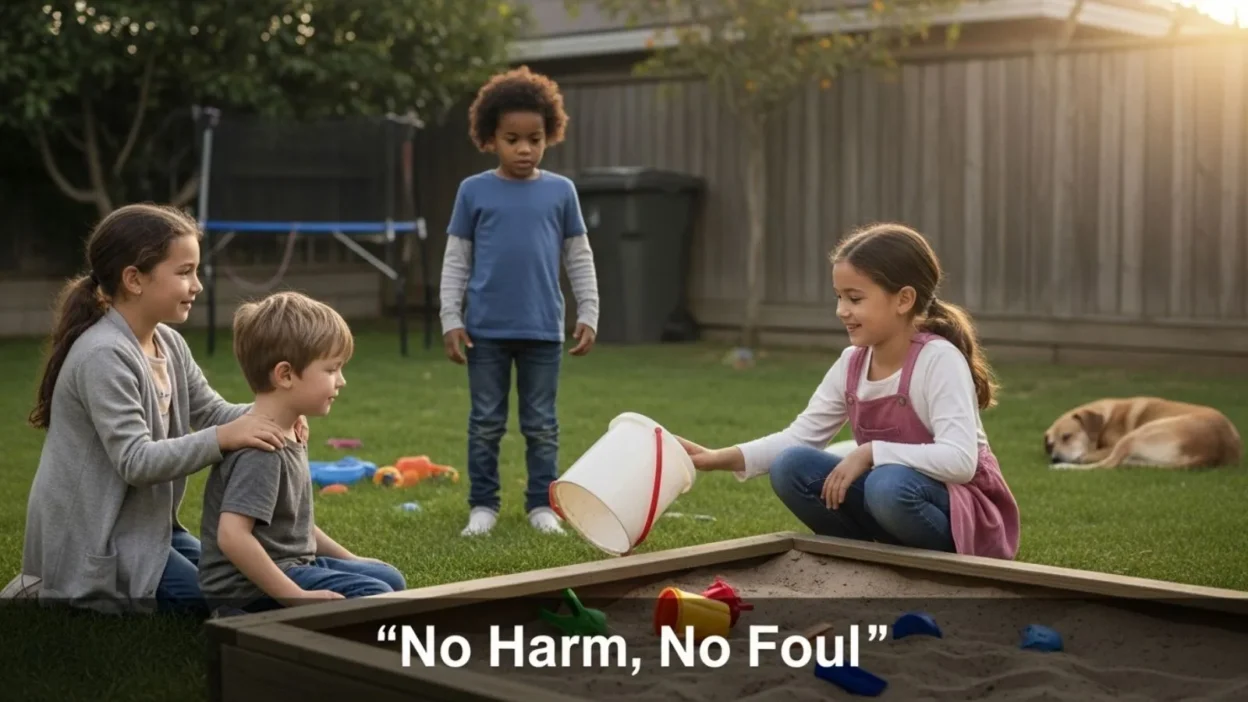
Have you ever been in a situation where someone accidentally made a small mistake, but it didn’t really cause any damage?
Maybe a friend borrowed your pen without asking, or a teammate bumped into you during a casual game. In these moments, you might hear the phrase No Harm No Foul.
But what does it really mean? This common English idiom is used to indicate that even though something might have gone slightly wrong, no real damage or problem occurred, so there’s no need to worry or complain.
Understanding this phrase is not only useful for everyday conversations but also helps you sound more natural when speaking or writing in English.
In this article, we will explore the meaning, origin, practical usage, and examples of “No Harm No Foul,” so you can confidently use it in both casual and professional situations.
What Does “No Harm No Foul” Mean?
The phrase “No Harm No Foul” is an English idiom that is often used in everyday conversation, sports, and casual interactions. At its core, it communicates a simple idea: if no real damage or negative consequence has occurred, there’s no reason to get upset or hold a grudge. In other words, minor mistakes, accidents, or missteps can be overlooked when they don’t cause any lasting harm.
Literally, “harm” refers to physical or emotional damage, while “foul” comes from sports terminology, like a minor rule violation in basketball or soccer. Figuratively, the phrase extends beyond sports to general life situations. For example, if someone accidentally spills water on your desk but cleans it up immediately, you might say, “No harm, no foul,” to indicate that there’s no need to complain or make a big deal out of it.
This idiom is often used to maintain a friendly, forgiving tone in conversations. It helps diffuse tension, shows understanding, and emphasizes that mistakes are a natural part of human interaction. Importantly, it should be used only when the situation truly causes no significant damage—otherwise, using it may seem dismissive or insensitive.
By mastering this phrase, you not only improve your English fluency but also sound more culturally aware, as it reflects a casual, forgiving attitude that is common in both spoken and written English today.
Origin and History of “No Harm No Foul”
The phrase “No Harm No Foul” has its roots in the world of sports, particularly in games like basketball and soccer. In these sports, minor rule violations or accidental contacts often occur. Referees or players might overlook these small infractions if no real damage or disadvantage resulted, emphasizing fair play and a spirit of forgiveness. This idea of letting minor mistakes slide likely evolved into the idiomatic expression we use today in everyday language.
While the exact first use of the phrase in literature is hard to pinpoint, it became popular in English-speaking cultures during the 20th century, spreading beyond sports into casual conversations, workplaces, and media. Its use reflects a cultural emphasis on forgiveness, tolerance, and pragmatism—a way of saying, “Let’s not make a problem out of something insignificant.”
Interestingly, the phrase is now widely recognized outside sports contexts. Writers, speakers, and even pop culture references use it to convey the idea that minor errors, accidents, or misunderstandings shouldn’t escalate into conflict. For example, in movies or TV shows, characters often say “No harm, no foul” after a small mishap, signaling that everything is okay and there’s no need for tension.
By understanding its origin, we can see why the phrase carries both literal and figurative meaning, and why it is particularly effective in situations where maintaining harmony and a positive tone is important. It’s more than just words—it’s a small lesson in forgiving and moving on.
How to Use “No Harm No Foul” in Daily Life
Using “No Harm No Foul” in daily life is easier than you might think, but context is key. The phrase works best in casual conversations, friendly exchanges, or situations where a minor mistake or accident has occurred and no serious damage resulted. It’s a way to show understanding, forgiveness, and a relaxed attitude toward small errors.
For example, if a friend accidentally bumps into you while walking, instead of getting upset, you might say, “No harm, no foul,” signaling that everything is fine. Similarly, in a workplace scenario, if a colleague makes a tiny error in a report that doesn’t affect the outcome, using this phrase can help diffuse tension and maintain a positive environment.
In written communication, such as emails or text messages, the phrase can be used informally to lighten the tone. For instance: “You forgot to send the document yesterday? No harm, no foul. Just send it when you can.” This shows patience and understanding without sounding critical.
However, it’s important to avoid using it in situations where real harm or serious consequences have occurred, as this can come across as dismissive or insensitive. The key is judging the situation carefully and reserving the phrase for minor incidents.
Overall, mastering the use of “No Harm No Foul” makes your English sound more natural and friendly. It’s a simple, effective way to convey forgiveness, flexibility, and casual understanding in both social and professional settings. Using it appropriately shows emotional intelligence and cultural awareness in your conversations.
Examples of the Phrase in Different Contexts
One of the best ways to truly understand “No Harm No Foul” is to see it in action across different situations. While the phrase originated in sports, it has become common in everyday life, professional settings, and casual conversations.
1. Sports Context:
In basketball or soccer, minor fouls often occur. If a player accidentally trips another without causing injury, a teammate or coach might say, “No harm, no foul,” signaling that the incident is not a big deal and play can continue. This usage emphasizes fair play and prevents unnecessary conflict on the field.
2. Friendship and Casual Conversations:
Imagine a friend accidentally borrows your book and forgets to return it immediately. Instead of getting upset, you might say, “No harm, no foul,” showing that you’re not offended and there’s no reason for tension. It conveys a forgiving attitude and keeps relationships smooth.
3. Workplace or Professional Settings:
If a colleague makes a small error in a shared project that doesn’t affect the overall outcome, you could respond with, “No harm, no foul,” to maintain a collaborative, positive environment. This signals patience, understanding, and emotional intelligence.
4. Online or Text Messaging:
In informal communication, such as chatting or texting, the phrase can lighten the mood: “You forgot to RSVP? No harm, no foul. We’ll see you there anyway.”
Similar Phrases and Synonyms
While “No Harm No Foul” is a widely recognized idiom, English offers several other phrases and expressions that convey a similar idea. These alternatives can help you vary your language while maintaining the same forgiving or casual tone.
1. “No Worries”
This is probably the most common alternative. It is informal and conveys that everything is fine, and there’s no need to be concerned. For example: “You forgot to bring the snacks? No worries, I’ve got some extras.”
2. “It’s Okay”
Simple and versatile, this phrase works in both casual and semi-formal contexts. It reassures someone that a small mistake hasn’t caused any real problem: “You spilled some coffee? It’s okay, I’ll clean it up.”
3. “No Problem”
Another casual phrase, often used in response to minor mistakes or requests. It shows a relaxed attitude and indicates that the situation is manageable: “You borrowed my charger? No problem!”
4. “All Good”
Popular in modern conversational English, “all good” signals that everything is fine and that no harm has been done: “You’re late? All good, we haven’t started yet.”
5. Context-Specific Synonyms
Depending on the setting, phrases like “Don’t worry about it” or “It’s nothing” can also be used to convey a similar forgiving or nonchalant attitude.
Common Mistakes and Misuse
While “No Harm No Foul” is a simple and useful phrase, it is important to use it correctly. Misusing it can lead to misunderstandings or make you appear insensitive. Here are some common mistakes to watch out for:
1. Using it in serious situations
One of the most frequent errors is applying the phrase to situations where real harm has occurred. For example, if someone accidentally causes property damage or injures another person, saying “No harm, no foul” may come across as dismissive. The phrase is meant for minor incidents with no lasting consequences, not serious accidents or conflicts.
2. Overusing the phrase
Repeating the phrase too often can make you sound casual to the point of being careless or sarcastic. While it signals forgiveness, overuse may unintentionally suggest you’re not taking things seriously. Use it sparingly for small mishaps where genuine understanding is appropriate.
3. Misjudging the audience
Not everyone may be familiar with this idiom, especially non-native English speakers. Using it in formal writing, professional emails, or with people unfamiliar with idiomatic expressions can cause confusion. In such cases, simpler alternatives like “It’s okay” or “No problem” might work better.
4. Using it sarcastically
While sarcasm can sometimes be humorous, using “No Harm No Foul” sarcastically may make the other person feel mocked rather than forgiven. Tone and context are critical to convey the intended meaning.
Fun Facts and Pop Culture Usage
The phrase “No Harm No Foul” isn’t just a useful idiom; it has also found its way into pop culture, movies, TV shows, and literature, making it a fun and recognizable expression in English. Its casual, forgiving tone makes it perfect for characters who want to diffuse tension or highlight a laid-back personality.
For example, in sports-themed movies or shows, you might hear players say, “No harm, no foul” after a minor collision or accidental mistake on the field. It emphasizes fair play, camaraderie, and understanding. Outside of sports, many TV sitcoms and films use the phrase in humorous situations where minor mishaps occur—like spilling coffee, bumping into someone, or misplacing items—without creating real conflict.
Interestingly, the phrase has also been referenced in books, blogs, and online content to illustrate a forgiving attitude or casual approach to life’s small mistakes. Writers often use it to signal that a minor blunder isn’t worth worrying about, creating a friendly and approachable tone for readers.
Another fun fact: the phrase has become popular in social media captions, memes, and casual texting, often abbreviated as NHNF. Its widespread use shows how idiomatic expressions can evolve from specific origins (like sports) to everyday cultural relevance.
By incorporating “No Harm No Foul” into your own conversations, writing, or online communication, you’re not just using an idiom—you’re connecting with a rich cultural history and demonstrating a casual, forgiving attitude that resonates with people in both casual and social contexts.
FAQs About No Harm No Foul
1. What does “No Harm No Foul” mean?
It means that even if a minor mistake or accident occurred, no real damage was done, so there’s no need to worry or complain.
2. Can it be used in professional settings?
Yes, but carefully. It’s appropriate for minor errors or accidents that don’t affect outcomes. Avoid using it for serious mistakes or in highly formal situations.
3. Is it considered formal or informal?
The phrase is informal and conversational. It works best in casual interactions, friendly workplaces, or social media, but not in formal writing or official reports.
4. Where did “No Harm No Foul” come from?
The phrase originated in sports, like basketball and soccer, where minor fouls were overlooked if they caused no real harm. Over time, it became a common idiom in everyday English.
5. Can it be used sarcastically?
While possible, sarcasm may make it sound dismissive or mocking. Use it genuinely to maintain a friendly and forgiving tone.
6. Are there similar phrases I can use?
Yes! Alternatives include “No worries,” “It’s okay,” “No problem,” and “All good.” These phrases convey a similar forgiving attitude.
7. Can it be used in text messages or social media?
Absolutely! It’s widely used online and in messaging apps to lighten the mood after small mistakes or mishaps.
Conclusion:
The phrase No Harm No Foul is more than just an idiom it’s a reflection of a forgiving, relaxed, and understanding attitude that is valuable in everyday life.
From its origins in sports to its use in casual conversations, professional settings, and even pop culture, it has become a versatile expression for handling minor mistakes or accidents with grace.
By learning the meaning, origin, and proper usage of No Harm No Foul you can confidently apply it in conversations, emails, social media, and even storytelling.
Remember to use it appropriately only when no real harm has occurred and be mindful of context and tone to avoid misunderstandings.
If you’re interacting with friends, colleagues, or online communities, incorporating this phrase into your English vocabulary shows cultural awareness, emotional intelligence, and a friendly approach.
So next time a minor mishap happens, you can simply smile and say: “No harm, no foul.”