Have you ever heard someone say, “He’s in like Flynn” and wondered what it actually means? This catchy phrase has been part of English slang for decades, yet many people don’t know its origin or why it became so popular.
If you’ve come across it in movies, TV shows, or casual conversation, understanding the meaning of In Like Flynn can make your language richer and your conversations more fun.
The expression isn’t just about being “in” or successful it carries a cheeky, confident vibe that has kept it alive in pop culture. In this article, we’ll explore what In Like Flynn means, where it came from, and how it’s used today.
From its Hollywood roots to modern-day usage, you’ll learn everything you need to know about this fascinating idiom and maybe impress a few friends by using it correctly!
What Does “In Like Flynn” Mean?
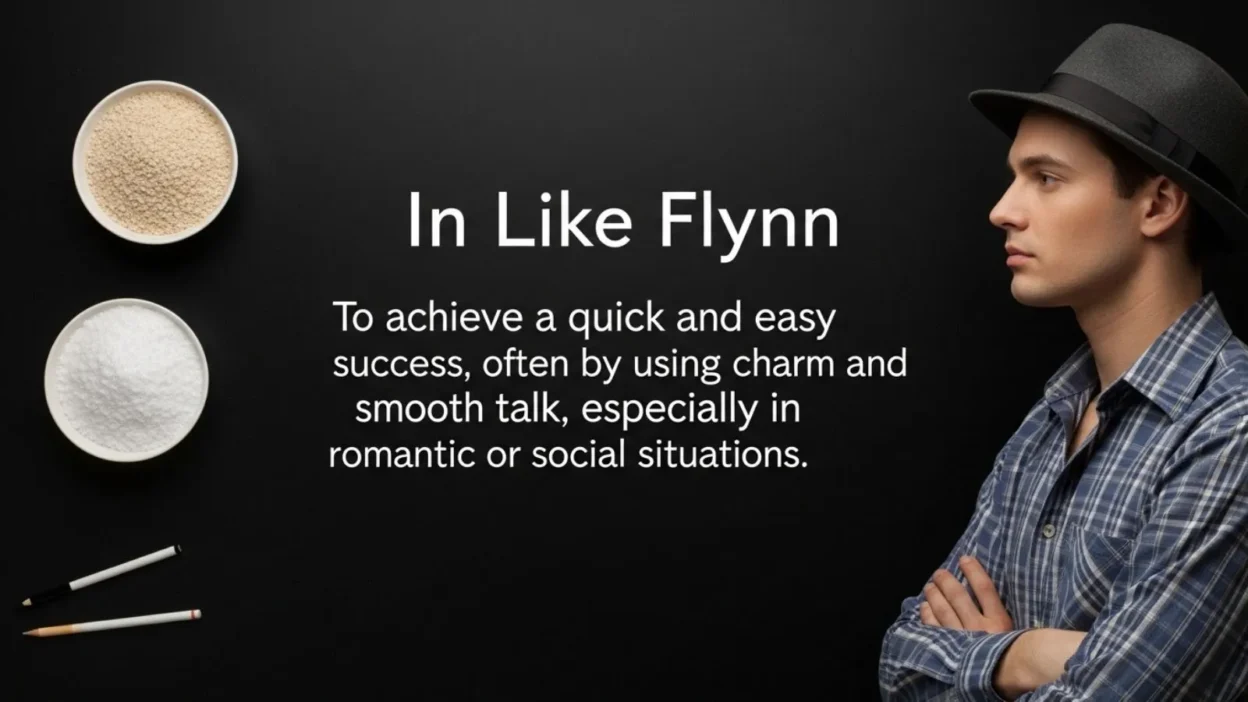
The phrase “In Like Flynn” is an idiom used to describe someone who achieves success or gains access to something quickly and effortlessly. When you hear it, it usually implies that a person has accomplished their goal with charm, skill, or a bit of luck. For example, if someone says, “He got the job without even trying—he’s in like Flynn,” it means the person succeeded easily, almost as if it was guaranteed.
The expression carries a playful, confident tone, often used humorously in conversation. While it can apply to any form of success—landing a job, getting a date, or completing a challenge—it’s important to note that the phrase is informal and best suited for casual conversations rather than formal writing.
Interestingly, the idiom doesn’t refer to the literal act of being “in” or any physical location. Instead, it’s all about effortless achievement or smooth entry into a situation. This figurative meaning has helped the phrase stay relevant for decades, particularly in English-speaking countries.
By understanding this idiom, you can add a touch of wit and cultural flair to your conversations. It also helps you interpret references in movies, TV shows, or social media posts where people casually say someone is “in like Flynn.” Next, we’ll explore the origin of this intriguing phrase and how a Hollywood star helped it become immortal in slang.
The Origin of “In Like Flynn”
The idiom “In Like Flynn” is widely believed to have originated from the life of the famous Hollywood actor Errol Flynn (1909–1959), known for his swashbuckling roles and charismatic personality. Flynn was not only a celebrated movie star but also famous for his charm off-screen, particularly with women. Rumors of his romantic escapades and reputation for effortlessly winning over partners led people to associate his name with easy success or smooth access.
The phrase began appearing in American slang in the late 1930s and 1940s, around the height of Flynn’s Hollywood fame. Tabloids and gossip magazines often highlighted his adventurous lifestyle, which reinforced the idea that anything Flynn wanted—whether fame, fortune, or romance—he could get with ease. Over time, this association transformed into a catchy idiom, used humorously to describe anyone who achieves their goal without struggle.
Interestingly, there is some debate about whether the phrase originally referred specifically to romantic success or to success in general, but by the 1940s it had become a popular slang expression in everyday conversation. It even appeared in newspapers, radio shows, and later in movies, helping cement its place in American culture.
Today, most people use “In Like Flynn” without necessarily knowing about Errol Flynn himself, but understanding the origin adds a layer of historical charm to the phrase. It’s a fascinating example of how celebrity lives can influence language and idioms that last for decades.
How “In Like Flynn” Became Popular
After its origin in the 1930s and 1940s, “In Like Flynn” quickly became a widely recognized expression in American slang. Part of its popularity came from Errol Flynn’s rising stardom in Hollywood—his swashbuckling roles in films like Captain Blood and The Adventures of Robin Hood made him a household name. Fans admired not only his acting skills but also his charismatic personality and daring lifestyle, which fueled the idea that Flynn could “get whatever he wanted with ease.”
The phrase first gained traction in print media, radio shows, and newspapers, often appearing in stories about Flynn’s off-screen adventures. People began using it humorously in everyday conversations to describe effortless success in dating, jobs, or other pursuits. By the 1940s, it had fully entered American vernacular and even crossed over into other English-speaking countries.
Its popularity was further reinforced in later decades through movies, television shows, and pop culture references. Writers and comedians loved the phrase for its catchy rhythm and playful connotation, using it to convey charm, confidence, and quick success. Even today, it shows up in sitcoms, social media posts, and memes, often detached from its original Hollywood context.
Ultimately, the charm of “In Like Flynn” lies in its combination of historical intrigue, cultural references, and humor. It’s a phrase that started with a legendary actor but evolved into a timeless idiom for effortless achievement, proving that celebrity influence can leave a lasting mark on language.
Examples of “In Like Flynn” in Modern English
Even decades after its creation, “In Like Flynn” remains a playful and recognizable idiom in modern English. It’s most often used to describe someone achieving success or gaining entry easily, usually in a casual, humorous way.
For example, in conversation, you might hear:
- “Did you hear he got front-row tickets to the concert? He’s in like Flynn!”
- “She aced the interview without even studying—totally in like Flynn.”
The phrase can also appear in movies, TV shows, and online content. Comedians or screenwriters often use it to convey quick, effortless success, especially when a character succeeds with charm or luck rather than hard work. Social media users sometimes use it in memes or captions when sharing personal wins or humorous achievements.
In written English, it’s usually informal and fun, so it works best in casual blog posts, dialogue, or storytelling. It’s also versatile: you can apply it to professional, social, or even romantic contexts, as long as the scenario involves smooth, almost effortless success.
Using this idiom in your own language adds a touch of wit and cultural flair, showing awareness of classic American slang. It can make everyday expressions more colorful and help you stand out in casual conversation.
Common Misunderstandings About “In Like Flynn”
Although “In Like Flynn” is widely recognized, it’s also often misunderstood. One common misconception is that the phrase refers only to romantic or sexual success because of Errol Flynn’s notorious love life. While his charm and romantic escapades inspired the idiom, the modern use of the phrase is much broader—it can describe any situation where someone achieves a goal quickly or effortlessly. For example, landing a job, completing a project, or winning a contest can all be described as being “in like Flynn.”
Another misunderstanding is the literal interpretation. Some people think it refers to physically “getting in” somewhere, like entering a building or a club. However, the phrase is purely figurative, emphasizing ease of success rather than literal entry.
People also sometimes confuse it with similar expressions such as “in the bag” or “easy as pie.” While these idioms share a general meaning of effortless achievement, “In Like Flynn” carries a slightly cheeky or playful tone, often implying charm, luck, or charisma played a role.
Finally, context matters. Using the phrase in formal writing or professional emails may seem out of place, so it’s best reserved for casual conversation, blogs, or storytelling. Understanding these nuances ensures you use the idiom appropriately, and helps you appreciate both its historical roots and contemporary charm.
Fun Facts About Errol Flynn
Understanding Errol Flynn’s life helps explain why the phrase “In Like Flynn” became so popular. Flynn, born in 1909 in Tasmania, Australia, rose to fame as one of Hollywood’s most charming and daring actors. He was best known for swashbuckling roles in classics like Captain Blood and The Adventures of Robin Hood, where his charisma and fearless performances captivated audiences worldwide.
Off-screen, Flynn’s life was equally dramatic. He had a reputation for being a ladies’ man, often surrounded by gossip and rumors about his romantic adventures. This notorious charm contributed directly to the idiom “In Like Flynn,” which originally implied effortless romantic success.
Flynn was also known for his adventurous lifestyle. He enjoyed sailing, horse riding, and outdoor escapades, sometimes taking risks that few stars of his era dared to attempt. These traits made him seem larger than life, reinforcing the idea that he could achieve anything with ease.
Despite his wild lifestyle, Flynn was a talented actor whose films remain iconic. His influence extended beyond cinema, impacting language and popular culture. Even today, references to Flynn evoke images of charm, luck, and effortless success.
Fun trivia includes his multiple marriages, famous friendships with other Hollywood stars, and even involvement in legal controversies, all of which kept him in the public eye. These elements of his life combined to make “In Like Flynn” a memorable and enduring idiom, perfectly capturing his unique combination of talent, charm, and audacity.
Using “In Like Flynn” in Your Conversations
Now that you understand the meaning and origin of “In Like Flynn,” it’s time to see how you can use it naturally in everyday conversation. This idiom is informal, playful, and confident, so it works best in casual settings, storytelling, or humorous dialogue.
For example, you might say:
- “He charmed the recruiter and got the job—he’s in like Flynn!”
- “She walked into the VIP party without a problem—totally in like Flynn.”
The key is to use it when someone achieves something with ease, luck, or charm, rather than hard effort. It’s especially effective when describing scenarios that have a lighthearted or slightly cheeky tone.
You can also integrate it into writing, such as blog posts, social media captions, or dialogue in stories.
For instance:
- “When Mark showed up with the perfect pitch, he was in like Flynn, and the deal was sealed.”
A few tips for proper use:
- Keep it casual – avoid formal reports or professional emails.
- Match the tone – the phrase works best with humor, charm, or playful situations.
- Pair with examples – give context so your audience understands the effortless success.
By practicing these tips, you can add a dash of classic Hollywood flair to your conversations. Using “In Like Flynn” shows cultural awareness, humor, and a confident grasp of English idioms. It’s a small phrase that can make your language stand out and feel more engaging.
Similar Idioms and Expressions
While “In Like Flynn” is a unique and playful idiom, English has many other expressions that convey effortless success or quick achievement. Knowing these can help diversify your language and make your writing or speech more colorful.
One common alternative is “in the bag,” which suggests that success is already secured. For example, “With her experience and charm, the promotion was in the bag.” Another is “easy as pie,” emphasizing simplicity or lack of difficulty, e.g., “Don’t worry about the exam; it’ll be easy as pie.”
Other similar phrases include “smooth sailing,” often used to describe situations that proceed without problems, and “a walk in the park,” which conveys ease and lack of challenge. These idioms, like “In Like Flynn,” rely on figurative language and cultural context to create imagery and engagement.
The difference is subtle: while phrases like “easy as pie” focus on the simplicity of the task itself, “In Like Flynn” adds a layer of charm, luck, or social skill. It’s less about the effort and more about the effortless flair someone brings to the situation.
Using a mix of these idioms can make your language more versatile. You might say, “Getting the client’s approval was smooth sailing—he was definitely in like Flynn.” By understanding these nuances, you can communicate ideas of success and ease in a way that is lively, humorous, and culturally informed, making your English richer and more expressive.
Why “In Like Flynn” Is Still Relevant Today
Even decades after its creation, “In Like Flynn” continues to be a recognizable and fun idiom in modern English. Its charm lies in its combination of historical context, pop culture roots, and playful tone. People still use it to describe situations where someone achieves success effortlessly, often with charm, luck, or skill.
One reason for its lasting relevance is its appearance in pop culture. From movies and TV shows to social media posts and memes, the phrase pops up whenever someone wants to convey smooth success or confident charm. Writers, bloggers, and content creators enjoy using it because it’s concise, colorful, and carries a playful nod to history.
Another reason is its versatility. Unlike some slang that becomes outdated, “In Like Flynn” can apply to a wide range of contexts—landing a job, winning a game, or impressing friends. Its figurative meaning allows speakers to adapt it creatively, making it feel fresh even in casual modern conversations.
Finally, the phrase connects speakers with classic Hollywood history. Using it demonstrates cultural awareness and an appreciation for how language evolves. Even if the audience doesn’t know about Errol Flynn himself, the idiom still adds a sense of wit, charm, and effortless success to dialogue or writing.
Summary & Takeaways
The idiom “In Like Flynn” is a playful and enduring part of English slang, representing effortless success, charm, and sometimes a bit of luck. Originating from the legendary Hollywood actor Errol Flynn, the phrase captured his reputation for smooth achievements, especially in romance and social situations, and soon became a staple of American vernacular.
Understanding the meaning of In Like Flynn helps you use it confidently in conversation, writing, and storytelling. It’s informal and versatile, making it perfect for casual dialogue, blog posts, social media captions, and humorous anecdotes. Whether describing someone landing a job with ease or winning over friends, the idiom adds wit, charm, and cultural flair.
It’s also valuable to recognize similar idioms, such as “in the bag,” “smooth sailing,” or “easy as pie,” which convey ease or effortless success in slightly different ways. However, In Like Flynn stands out for its playful and cheeky tone, often implying charm or luck rather than just simplicity.
Finally, the phrase’s continued relevance in pop culture, memes, and modern conversations proves that language can be both historical and contemporary. Using it correctly shows not only an understanding of idioms but also a connection to cultural history and a sense of humor.
In summary, “In Like Flynn” is more than just a catchy phrase—it’s a bridge between Hollywood history and modern language, giving speakers and writers a fun, memorable way to describe effortless achievement. Incorporate it wisely, and you’ll add style, humor, and personality to your English expression.
Frequently Asked Questions About “In Like Flynn”
1. What does “In Like Flynn” mean?
“In Like Flynn” is an idiom used to describe someone achieving success easily or gaining access to something effortlessly. It often implies charm, luck, or smooth skill, rather than hard work.
2. Where did the phrase come from?
The expression comes from the life of Hollywood actor Errol Flynn (1909–1959), famous for his charisma, adventurous roles, and romantic escapades. His effortless success in both movies and personal life inspired the idiom.
3. Is “In Like Flynn” only about romantic success?
No. While it originally had romantic connotations due to Flynn’s reputation, today it applies to any situation where someone succeeds quickly or easily, such as getting a job, winning a contest, or completing a challenge.
4. How do you use “In Like Flynn” in a sentence?
You can use it in casual conversations or informal writing.
Examples:
- “She got VIP access to the event—she’s in like Flynn!”
- “He passed the exam without studying—totally in like Flynn.”
5. Is it formal or informal language?
It’s informal and best suited for casual speech, storytelling, blogs, or social media. Avoid using it in formal reports or professional emails.
6. Are there similar idioms?
Yes. Idioms like “in the bag,” “smooth sailing,” or “easy as pie” convey effortless success, but “In Like Flynn” is playful and often implies charm or luck.
Conclusion
The idiom “In Like Flynn” is more than just a catchy phrase it’s a playful expression of effortless success, charm, and confidence.
From its Hollywood origins with Errol Flynn to modern-day usage in movies, social media, and casual conversation, the phrase has stood the test of time.
Using it correctly adds humor, cultural awareness, and personality to your language, making your speech or writing more engaging.
If describing someone acing a challenge, impressing others, or achieving a goal with ease, “In Like Flynn” conveys that special mix of luck, skill, and smooth charm.
Pairing it with similar idioms like “in the bag” or “smooth sailing” can further enrich your expressions.
By understanding its meaning, origin, and modern application, you can confidently bring this classic idiom into everyday conversation, keeping its playful spirit alive for generations to come.