Have you ever heard someone say, “Let’s hunker down” and wondered what they really meant? The phrase “hunker down” is commonly used in both everyday conversation and professional settings, yet many people are unsure of its exact meaning.
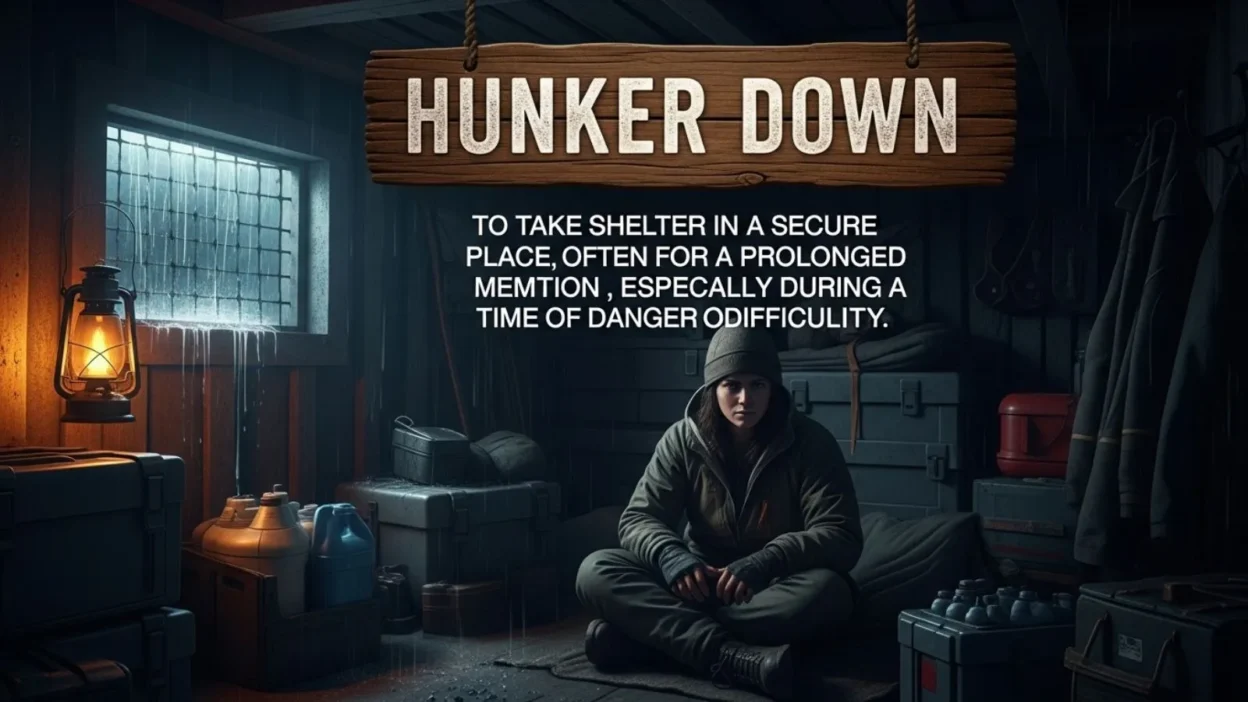
At its core, hunker down meaning refers to taking shelter, staying put, or focusing intently on a task, especially during challenging situations.
But over time, it has evolved into a figurative expression that emphasizes concentration, preparation, and perseverance if it’s tackling a busy workweek, bracing for a storm, or managing life’s unexpected hurdles.
Understanding this phrase not only improves your English vocabulary but also helps you navigate conversations with confidence.
In 2026, as people increasingly seek strategies for productivity, mental resilience, and safety, knowing how and when to hunker down has become more relevant than ever.
This article will explore the origins, modern usage, and practical examples of the phrase, so you can use it naturally in daily life.
What Does “Hunker Down” Mean?
The phrase “hunker down” may sound simple, but it carries both literal and figurative meanings that are important to understand. Literally, hunker down refers to crouching, taking shelter, or securing oneself in a safe place during a storm, emergency, or other challenging situations. Imagine someone preparing for heavy rainfall or a snowstorm—they might hunker down in their home, making sure everything is secure and ready.
Over time, the phrase has evolved into a figurative expression, especially in modern English. In everyday life and professional settings, hunkering down often means focusing intently on a task, avoiding distractions, or dedicating yourself fully to achieve a goal. For example, a student might hunker down to study for exams, or an employee may hunker down to complete a tight work deadline.
Understanding the hunker down meaning also involves recognizing its nuances. It conveys not just action but mindset—preparing, committing, and persisting through difficult or busy periods. The phrase implies a temporary but intense effort, whether for safety, productivity, or personal growth.
Here are a few simple examples to illustrate both uses:
- Literal: During the hurricane, the family hunkered down in their basement until the storm passed.
- Figurative: With the project deadline approaching, the team decided to hunker down and finish all tasks by Friday.
By knowing both literal and figurative uses, you can confidently use hunker down in conversation, writing, or even professional contexts.
Origin and History of “Hunker Down”
The phrase “hunker down” has an interesting history that helps explain how its meaning evolved over time. The word “hunker” originates from the Scottish word hunkar, which means “to squat” or “to crouch low.” Historically, it was used to describe someone physically lowering themselves, often for safety or to stay unnoticed. When combined with “down,” the phrase literally emphasized the action of lowering one’s body close to the ground—perfect for situations requiring caution or protection.
The earliest documented uses of hunker down in English can be traced back to military and survival contexts. Soldiers would hunker down to avoid enemy fire, and civilians would do the same during storms or natural disasters. The expression conveyed both physical readiness and strategic patience, highlighting the importance of staying grounded in uncertain circumstances.
Over time, the literal meaning expanded into figurative use. By the 20th century, writers and speakers began using hunker down to describe mental focus and preparation rather than just physical crouching. Today, it is widely used in professional, academic, and everyday contexts to describe concentrating, preparing, or persevering during challenges.
Understanding this history not only clarifies the hunker down meaning but also shows the versatility of the phrase. From crouching during a storm to dedicating yourself fully to a project, the essence of hunkering down has always been about readiness, commitment, and resilience—qualities that remain relevant in 2026.
Modern Usage of “Hunker Down” in 2026
In 2026, the phrase “hunker down” has become more versatile than ever, extending beyond literal shelter to figurative uses in everyday life, work, and personal growth. While its original meaning involved crouching or taking cover during storms or emergencies, modern usage often emphasizes focus, preparation, and resilience in both professional and personal contexts.
In the workplace, professionals may say they need to hunker down to meet tight deadlines, complete important projects, or prepare for a challenging quarter. For example: “With the product launch next week, the marketing team is ready to hunker down and finalize all campaigns.” Here, the phrase conveys dedication, focus, and persistence rather than physical action.
At home or in personal life, people use hunker down to describe preparing for challenging circumstances—like budgeting, organizing for a busy season, or tackling long-term personal goals. During unpredictable times, such as extreme weather events, health crises, or economic changes, hunkering down represents thoughtful preparation and patience.
Social media and pop culture also reflect this shift. Memes, short videos, and motivational posts often use hunker down to encourage productivity, mental resilience, or self-care. It’s not just about staying put physically; it’s about committing fully to a task, a goal, or even personal wellness routines.
Understanding modern usage ensures that you can use hunker down meaning naturally in conversation, writing, and professional communication in 2026. Whether it’s literal or figurative, the phrase signals focus, preparation, and determination—qualities that are highly valued today.
Synonyms and Related Phrases for Hunker Down
Understanding synonyms and related phrases for “hunker down” can help you use the idiom more naturally and enrich your English vocabulary. While hunker down implies focus, preparation, or shelter, several phrases convey similar ideas in slightly different contexts.
One closely related phrase is “batten down the hatches,” which comes from nautical terminology. Sailors would secure a ship’s hatches before a storm to prevent water from entering. Today, it is used figuratively to mean preparing for difficult situations or challenges. For example: “With the market volatility this quarter, investors are battening down the hatches.”
Another synonym is “dig in,” often used in professional or academic contexts. It suggests committing fully to a task or effort. For instance: “The team dug in to complete the project before the deadline.” Unlike hunkering down, which can imply patience and waiting, dig in emphasizes active effort and engagement.
The phrase “stay put” is a simpler alternative, mostly used literally. It indicates remaining in one place for safety or convenience. Example: “During the snowstorm, everyone stayed put until roads were cleared.”
By learning these synonyms, you can choose the right phrase depending on tone and context literal, figurative, casual, or professional. Each adds nuance to your expression, while still capturing the essence of hunkering down: preparation, focus, and resilience.
Examples of “Hunker Down” in Sentences
One of the best ways to truly understand the hunker down meaning is through practical examples. The phrase can be used in both literal and figurative contexts, helping you apply it naturally in conversation, writing, or professional communication.
Literal Examples:
- “During the thunderstorm, the family hunkered down in their basement until it passed.”
- “Residents hunkered down in their homes as heavy snow covered the city streets.”
In these cases, hunker down indicates physically taking shelter or staying safe during dangerous conditions.
Figurative Examples:
- “With finals approaching, Maria decided to hunker down and study for hours each day.”
- “The team hunkered down to complete the marketing campaign before the product launch.”
- “He hunkered down at home to focus on writing his first novel.”
Here, the phrase emphasizes focus, dedication, and perseverance rather than physical action.
Everyday and Modern Usage:
- “During tax season, accountants hunker down to meet tight deadlines.”
- “With the new app launch, the startup team hunkered down to resolve all bugs.”
These examples show how hunker down has become relevant in 2026, especially in work, studies, or personal projects where sustained effort is required.
Using multiple examples helps readers clearly see the flexibility of the phrase. By practicing both literal and figurative applications, you can confidently use hunker down in a variety of situations—whether preparing for a storm, tackling a project, or simply committing to a goal.
Tips for Hunkering Down Effectively
1. Create a Distraction-Free Zone
Whether working from home, studying, or preparing for a project, reduce distractions. Turn off notifications, organize your workspace, and let others know you need uninterrupted time. A clean, focused environment makes it easier to hunker down mentally.
2. Set Clear Goals
Before you hunker down, define what you want to achieve. Break tasks into smaller, manageable steps. For example, instead of “finish the report,” set goals like “complete the introduction and first section by noon.” Clear objectives keep your focus sharp.
3. Use Time Management Techniques
Methods like the Pomodoro Technique—working in focused intervals with short breaks—can help maintain concentration. Scheduling blocks of time to hunker down ensures sustained effort without burnout.
4. Prepare Physically and Mentally
Just as literal hunkering down requires preparation, figurative hunkering down benefits from mental readiness. Stay hydrated, eat well, and take short breaks to refresh your mind. Mental clarity enhances focus and resilience.
5. Embrace Patience and Persistence
Hunkering down often involves sustained effort. Be patient with your progress and persistent in completing tasks. Remember, the essence of hunkering down is commitment and focus until the challenge is met.
Common Mistakes or Misunderstandings About “Hunker Down”
1. Confusing Literal and Figurative Meaning
One common mistake is using hunker down literally when a figurative meaning is intended—or vice versa. For example, saying “I’m hunkering down in my office to avoid the rain” mixes physical and work-focused contexts incorrectly. Make sure the usage fits the situation: literal for physical shelter, figurative for focus or preparation.
2. Overusing the Phrase
Some people overuse hunker down in casual conversation, which can make it sound repetitive or forced. Using synonyms like dig in, batten down the hatches, or stay put occasionally can add variety and nuance.
3. Ignoring Context
Context matters. Hunker down is often used for temporary, intense effort or preparation. Using it for routine, casual tasks—like watching TV or cleaning casually—can sound odd: “I’m hunkering down to do the dishes” exaggerates the meaning unnecessarily.
4. Misunderstanding Tone
The phrase can imply urgency, focus, or resilience. Using it in a lighthearted or joking tone without clarity may confuse the listener. For example, “Let’s hunker down and have fun” can clash with the typical sense of seriousness.
Why Hunker Down Matters Today
In today’s fast-paced and unpredictable world, understanding and applying the concept of hunkering down is more relevant than ever. The phrase is not just an idiom—it represents a mindset of focus, preparation, and resilience, qualities that are essential in 2026.
Professionally, hunkering down allows individuals and teams to tackle complex projects, meet tight deadlines, and stay productive despite distractions. In an era of remote work, digital overload, and constant notifications, learning to hunker down helps people concentrate on meaningful work rather than getting pulled in multiple directions. For example, a startup team might hunker down to resolve technical issues before a major product launch, ensuring quality and efficiency.
On a personal level, hunkering down applies to preparation, mental focus, and self-discipline. Whether it’s budgeting during uncertain financial times, studying for exams, or completing personal projects, this mindset promotes consistency and perseverance. It encourages individuals to prioritize, plan, and dedicate themselves fully to the task at hand.
Additionally, hunkering down builds resilience. In times of stress, challenges, or unforeseen events—such as weather disruptions or health crises—those who can hunker down are better equipped to handle difficulties calmly and effectively.
In essence, hunker down is more than just a phrase; it’s a tool for thriving in modern life. By embracing its meaning and applying it strategically, people can enhance productivity, improve focus, and navigate life’s challenges with confidence and clarity in 2026.
Fun Facts & Trivia About “Hunker Down”
The phrase “hunker down” isn’t just practical—it also has some fascinating history and cultural relevance that make it fun to explore. For starters, the word “hunker” comes from Scottish roots, meaning “to crouch or squat,” which perfectly illustrates the literal origin of the expression. Over time, the phrase evolved from describing a physical action to representing focus, preparation, and perseverance.
Interestingly, hunker down has appeared in literature, movies, and even music. Writers often use it to show a character preparing for a storm, danger, or an intense challenge. In pop culture, phrases like “It’s time to hunker down and get serious” appear in motivational content, social media posts, and even video games, reflecting the phrase’s figurative popularity.
Another fun fact is its connection to survival and military contexts. Soldiers would literally hunker down during battles to avoid enemy fire, while civilians used it during natural disasters, showing how the phrase has always been linked to safety, patience, and strategy.
In 2026, the expression continues to resonate because it reflects both literal preparedness and mental focus. Social media memes, productivity tips, and even workplace motivational posts frequently use hunker down to encourage commitment and resilience.
Knowing these fun facts not only enriches your understanding of the hunker down meaning but also makes it easier to use the phrase creatively. Whether in writing, conversation, or online content, referencing its origins or pop culture appearances can make your language more vivid and engaging.
Frequently Asked Questions About “Hunker Down”
1. What does “hunker down” mean?
Hunker down means to take shelter, stay put, or focus intensely on a task. Literally, it refers to crouching or securing yourself in a safe place, while figuratively it represents preparation, concentration, and persistence.
2. Where does the phrase come from?
The word “hunker” originates from Scottish, meaning “to squat or crouch.” Combined with “down,” it initially described physically lowering oneself for safety. Over time, it evolved into an idiom for mental focus and preparation.
3. Can “hunker down” be used in work or personal life?
Yes! In modern usage, you can hunker down to meet a deadline, study for exams, complete a project, or prepare for personal challenges. It implies dedication, focus, and resilience.
4. What are some synonyms of “hunker down”?
Common synonyms include batten down the hatches, dig in, and stay put. Each has subtle differences: for example, batten down the hatches emphasizes preparation, dig in implies active effort, and stay put is mostly literal.
5. Is “hunker down” still relevant in 2026?
Absolutely. Whether in professional settings, personal projects, or social media culture, hunker down reflects focus, commitment, and mental readiness—qualities highly valued in today’s fast-paced world.
6. How do I use “hunker down” correctly?
Use it literally for shelter or figuratively for focus. Avoid overusing it, and make sure the context matches the intensity or preparation implied by the phrase. Examples: “We hunkered down during the storm” or “The team hunkered down to finish the report.”
Conclusion
Understanding the hunker down meaning goes beyond memorizing an idiom it’s about adopting a mindset of focus, preparation, and resilience.
From its literal origins in crouching for safety to its modern figurative use in work, studies, and personal projects, hunker down has proven to be a versatile and valuable phrase.
In 2026, as life becomes increasingly fast-paced and unpredictable, knowing when and how to hunker down can help you stay productive, calm, and prepared for challenges.
If you are tackling a tight deadline, preparing for a personal goal, or navigating unexpected events, applying the principles of hunkering down ensures efficiency and mental clarity.
By combining understanding, practical application, and a focus on perseverance, you can use hunker down confidently in both spoken and written English. Start embracing this mindset today, and watch how it enhances your focus, resilience, and overall success.