
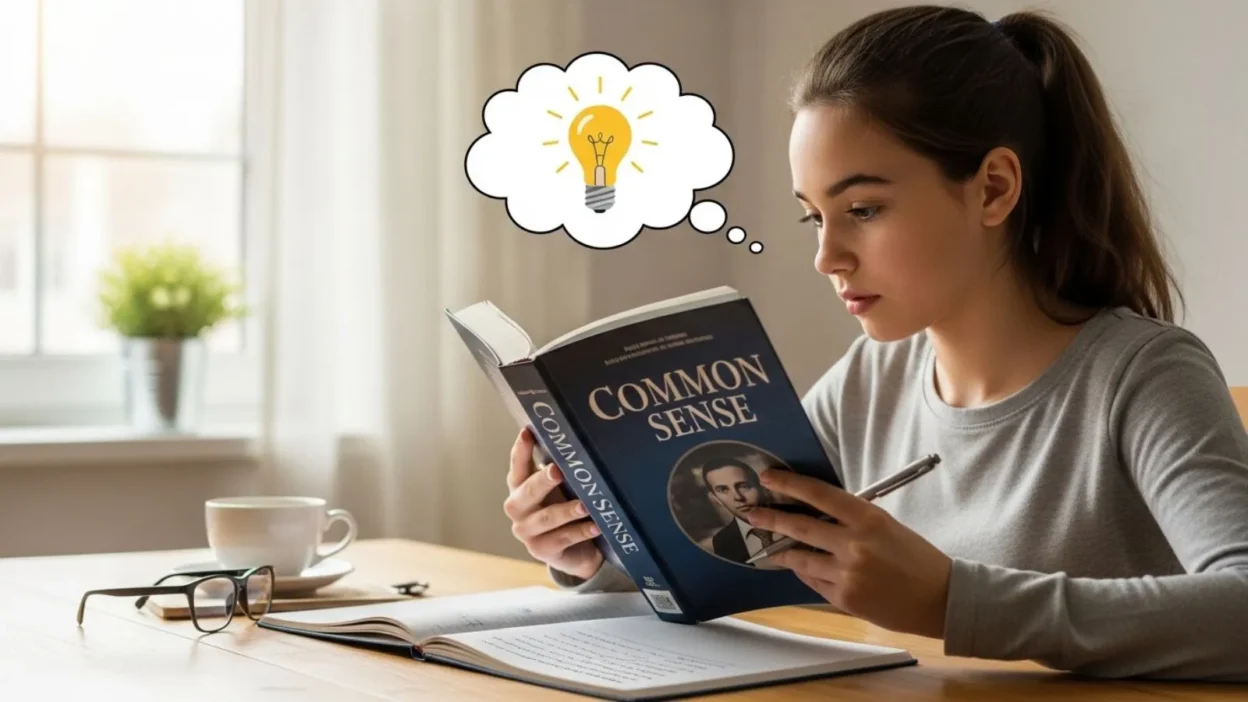
Common sense is a term we often hear, yet its true meaning is sometimes misunderstood. At its core, common sense refers to practical judgment and the ability to make sound decisions in everyday situations.
It’s not about intelligence or formal education; rather, it’s about understanding what is reasonable, logical, and effective in real life.
From knowing when to look both ways before crossing the street to making thoughtful choices at work, common sense shapes how we navigate daily challenges.
In a world full of information overload, the ability to rely on practical thinking has never been more important. In this article, we will explore the definition of common sense, its key characteristics, why it matters in life, and provide real-life examples.
By understanding and applying common sense, anyone can improve decision-making, solve problems efficiently, and handle situations with confidence.
What Is Common Sense? (Definition) (2026)
Common sense is often described as the basic ability to perceive, understand, and judge things that are shared by most people. In simpler terms, it’s practical thinking that guides everyday decisions. Unlike specialized knowledge or academic intelligence, common sense relies on intuition, observation, and experience to make sensible choices in real-life situations. The phrase “common sense” might suggest that everyone naturally possesses it, but in reality, it varies from person to person depending on experience, awareness, and reasoning.
Historically, philosophers have explored common sense in depth. Aristotle considered it a form of practical wisdom, helping individuals navigate life with judgment and balance. Over time, the concept has evolved to reflect everyday applications—knowing how to act in social situations, solve problems efficiently, or avoid unnecessary risks.
Common sense is not just about avoiding mistakes; it also involves understanding consequences, anticipating outcomes, and applying simple logic in daily life. For example, checking the weather before leaving home, reading instructions carefully, or responding politely in a conversation are all expressions of common sense.
By grasping the meaning of common sense, we can better appreciate its role in personal, social, and professional life. It is the invisible guide that helps people make decisions, maintain relationships, and handle challenges smoothly without overcomplicating situations.
Characteristics of Common Sense (2026)
1. Practicality:
Common sense is fundamentally about being practical. It focuses on solutions that work in real-life situations rather than abstract theories. For example, carrying an umbrella when it’s raining shows practical thinking rather than overcomplicating the scenario.
2. Universality:
Unlike specialized knowledge that applies to a specific field, common sense is universal. People from different cultures or backgrounds can often agree on what is “reasonable” or “logical.” For instance, basic safety rules, such as not touching fire, are understood across the world.
3. Intuition:
Common sense relies on instinctive understanding. It allows individuals to make quick judgments without extensive analysis. For example, sensing that a situation might be risky and choosing to avoid it is a natural application of intuition.
4. Simplicity:
True common sense avoids unnecessary complexity. It often presents the simplest, most straightforward solution to a problem. Simple reasoning—like checking if a door is locked before leaving home—can prevent potential issues.
5. Experience-Based:
While some aspects may seem natural, common sense often grows from experience. Observing outcomes, learning from mistakes, and noticing patterns all strengthen one’s ability to make sound judgments.
Importance of Common Sense in Daily Life (2026)
Understanding the meaning of common sense goes beyond theory—it plays a vital role in our everyday lives. Common sense is the invisible guide that helps people make decisions quickly, solve problems effectively, and avoid unnecessary mistakes.
In personal life, common sense ensures safety, efficiency, and smooth interactions. Simple acts like looking both ways before crossing the street, managing finances responsibly, or preparing for an important meeting are all examples where practical judgment matters. Without it, even small tasks can lead to complications.
At work, common sense contributes to productivity and better decision-making. Employees who apply practical thinking can anticipate problems, communicate clearly, and handle challenges without constant supervision. For instance, a manager using common sense might resolve conflicts fairly and efficiently, creating a positive work environment.
Socially, common sense helps maintain relationships. Understanding social cues, being polite, and responding appropriately in conversations prevent misunderstandings. It allows individuals to connect and collaborate with others more effectively.
Moreover, common sense is essential for critical decision-making and risk management. People who rely on practical judgment are less likely to fall for scams, make impulsive choices, or overlook potential consequences.
In short, common sense is a cornerstone of daily life. It blends experience, intuition, and practical reasoning to guide actions, making life safer, easier, and more manageable. Recognizing its importance empowers individuals to act wisely in both ordinary and complex situations.
Common Sense vs. Intelligence (2026)
A person can be highly intelligent, possessing advanced knowledge in science, math, or technology, yet lack common sense in everyday matters. For example, someone may solve complex equations but forget to lock their door or mismanage basic personal tasks. Conversely, a person with average academic intelligence can excel in practical decision-making by using observation, intuition, and experience.
Key differences include:
- Nature: Intelligence is mostly innate and can be measured through tests, whereas common sense develops through experience and practice.
- Application: Intelligence is often abstract and theoretical, while common sense is practical and immediately applicable.
- Scope: Intelligence can be specialized, such as in a particular field, while common sense is universal and relevant across various life situations.
Understanding this distinction helps emphasize the value of common sense. It’s not a replacement for intelligence, but a complementary skill that ensures knowledge is applied effectively. Practical thinking, awareness of consequences, and sound judgment often outweigh raw intelligence when navigating daily challenges.
Examples of Common Sense in Action (2026)
Understanding common sense meaning becomes much clearer when we look at practical examples from everyday life. Common sense is essentially the ability to make logical, reasonable decisions without overcomplicating situations.
In personal life, common sense is applied in simple ways: checking the weather before leaving home, budgeting expenses to avoid debt, or wearing appropriate clothing for an event. These small decisions may seem obvious, but they prevent problems and make life smoother.
At work, common sense can improve efficiency and relationships. For instance, responding politely to colleagues, following safety procedures, and prioritizing tasks logically are all examples of practical judgment. An employee using common sense can foresee potential issues, prevent misunderstandings, and save time for themselves and others.
In social situations, common sense helps maintain harmony and avoid conflict. Simple actions like listening carefully before responding, avoiding impulsive reactions, and respecting boundaries show practical awareness.
Even in problem-solving, common sense shines. Instead of choosing the most complex solution, a person might opt for the simplest, most effective approach—like using a backup plan during a technical failure or seeking advice before making a major purchase.
These examples highlight that common sense is not about knowledge alone; it is about applying practical reasoning to navigate daily life. By observing outcomes, learning from experiences, and thinking logically, anyone can develop and strengthen their common sense skills.
How to Improve Your Common Sense (2026)
1. Observe and Learn from Others:
Pay attention to how people make practical decisions in everyday life. Watching how experienced individuals handle situations can provide insights into effective problem-solving.
2. Reflect on Past Experiences:
Think about mistakes and successes. Analyze what worked and what didn’t. Learning from real-life experiences strengthens intuition and practical judgment.
3. Practice Decision-Making:
Start with small, everyday choices. For example, plan your day effectively, prioritize tasks, or handle conflicts calmly. Practicing decision-making builds confidence and sharpens judgment.
4. Keep Things Simple:
Avoid overcomplicating solutions. Common sense often favors straightforward, practical approaches over complex strategies. Ask yourself: “Is there an easier, more effective way to do this?”
5. Expand Your Knowledge and Awareness:
Read widely, engage in conversations, and expose yourself to new situations. The more diverse your experiences, the better your practical understanding of the world becomes.
6. Listen to Your Intuition:
Often, your instincts reflect accumulated knowledge and past experiences. Trusting your gut can help you make quick, sensible decisions.
Common Sense in Philosophy and Literature (2026)
The concept of common sense meaning extends beyond everyday life; it has deep roots in philosophy and literature. Philosophers and writers have long explored the role of practical judgment in guiding human behavior.
In philosophy, Aristotle emphasized practical wisdom, which closely aligns with common sense. He distinguished it from theoretical knowledge, suggesting that practical wisdom helps individuals make sound decisions in daily life. Similarly, thinkers like Thomas Paine, in his famous pamphlet Common Sense, highlighted the importance of straightforward reasoning and logical thinking to inspire action and social change.
Literature also reflects the value of common sense. Many classic novels portray characters who succeed not through extraordinary intelligence but through practical judgment, intuition, and good decision-making. For example, in stories where protagonists navigate social challenges or survive difficult situations, common sense often proves more valuable than book knowledge.
Modern psychology also recognizes the importance of practical reasoning. Behavioral studies show that people who apply common sense effectively make better choices, avoid unnecessary risks, and maintain stronger social relationships.
By examining philosophy, literature, and psychology, we see that common sense is a timeless skill. It has been admired, studied, and celebrated across cultures for centuries, emphasizing its universal relevance. Understanding these perspectives reinforces why common sense is not just a casual notion—it is a guiding principle that shapes thoughtful, effective, and balanced living.
Common Misconceptions About Common Sense (2026)
1. “Common sense is common for everyone”
One of the biggest myths is that everyone naturally possesses common sense. In reality, what seems obvious to one person may not be apparent to another. Common sense develops through experience, observation, and learning, and it can vary greatly between individuals.
2. “Common sense cannot be learned”
Some believe common sense is purely innate. However, it can be cultivated. By reflecting on past experiences, observing others, and practicing practical decision-making, anyone can strengthen their ability to make sound judgments.
3. “It’s only about simple decisions”
Many assume common sense only applies to basic tasks, like tying shoes or crossing the street. In truth, it extends to complex situations, such as resolving conflicts, managing finances, or making strategic choices at work.
4. “Common sense replaces knowledge or intelligence”
Common sense complements intelligence; it doesn’t replace it. While knowledge provides information, common sense determines how to apply it effectively in real life.
Frequently Asked Questions About Common Sense (2026)
1. What is common sense in simple words?
Common sense is the ability to make practical, logical decisions in everyday life. It helps people navigate situations using experience, observation, and simple reasoning rather than relying solely on formal knowledge.
2. Why is common sense important in life?
Common sense plays a crucial role in safety, problem-solving, and social interactions. It allows individuals to make effective choices, avoid unnecessary risks, and handle challenges with confidence. Without common sense, even intelligent people may struggle with daily decisions.
3. Can common sense be taught or improved?
Yes, common sense can be developed. Observing others, reflecting on experiences, practicing decision-making, and trusting intuition are effective ways to enhance practical judgment over time.
4. What is the difference between common sense and critical thinking?
While both involve reasoning, common sense focuses on everyday practical decisions, often instinctively. Critical thinking, on the other hand, involves a structured, analytical approach to evaluate information and solve complex problems. Both complement each other.
5. How do I know if I have common sense?
Indicators include the ability to make practical decisions, anticipate outcomes, solve problems efficiently, and interact appropriately with others. People with common sense often balance intuition with reasoning and avoid unnecessary complications.
Conclusion (2026)
Understanding common sense meaning is essential for navigating everyday life with confidence and clarity.
Common sense is not merely “common” knowledge; it is practical judgment, intuition, and the ability to make sound decisions in personal, social, and professional situations.
It helps individuals solve problems efficiently, avoid unnecessary risks, and maintain harmonious relationships.
While intelligence and education are valuable, common sense ensures that knowledge is applied wisely and effectively.
It can be cultivated through observation, reflection, experience, and mindful decision-making. By recognizing its characteristics, importance, and applications, anyone can enhance their practical reasoning skills.
In a rapidly changing world, relying on common sense is more crucial than ever.
Developing this skill empowers individuals to handle challenges, make thoughtful choices, and lead a more balanced, responsible life. Ultimately, common sense is a timeless guide that supports wiser, simpler, and more effective living.